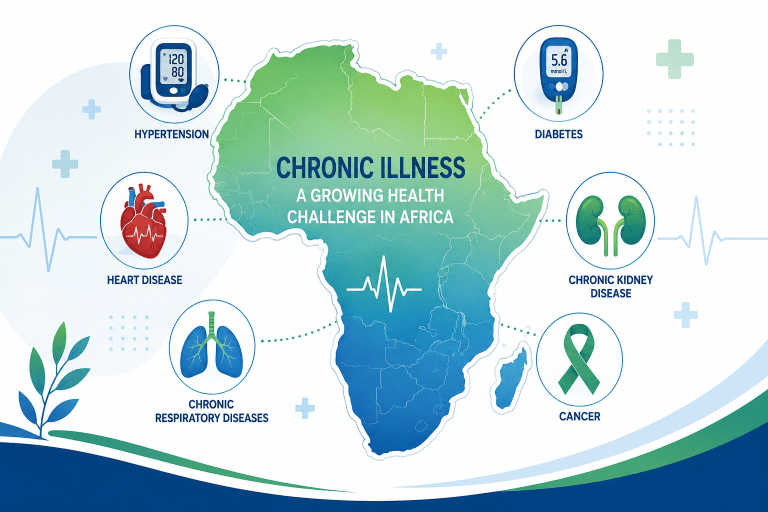
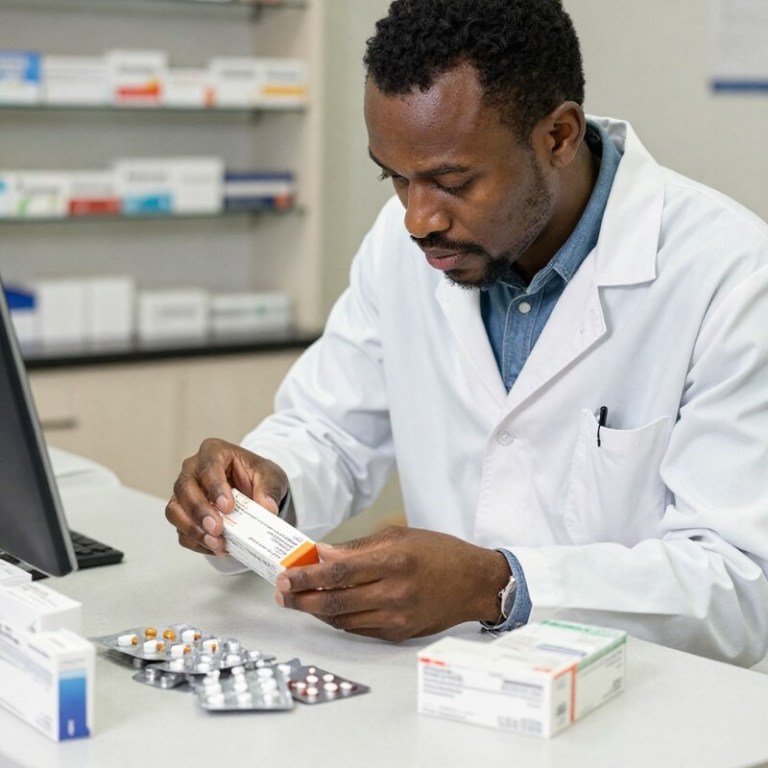
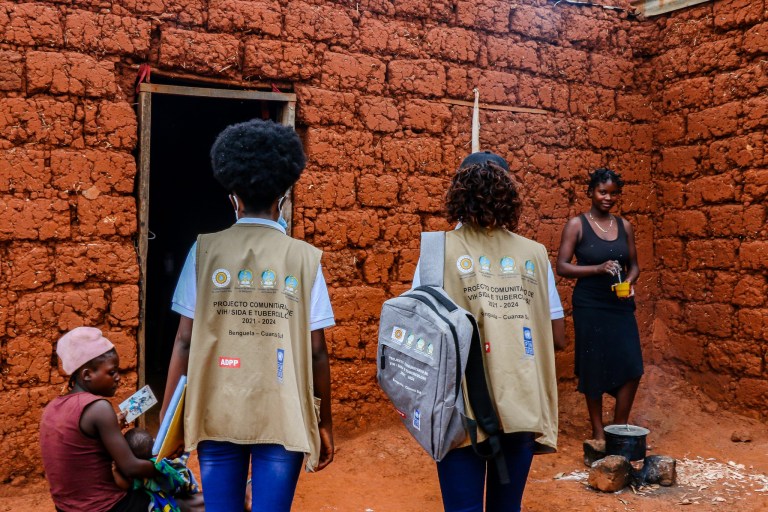
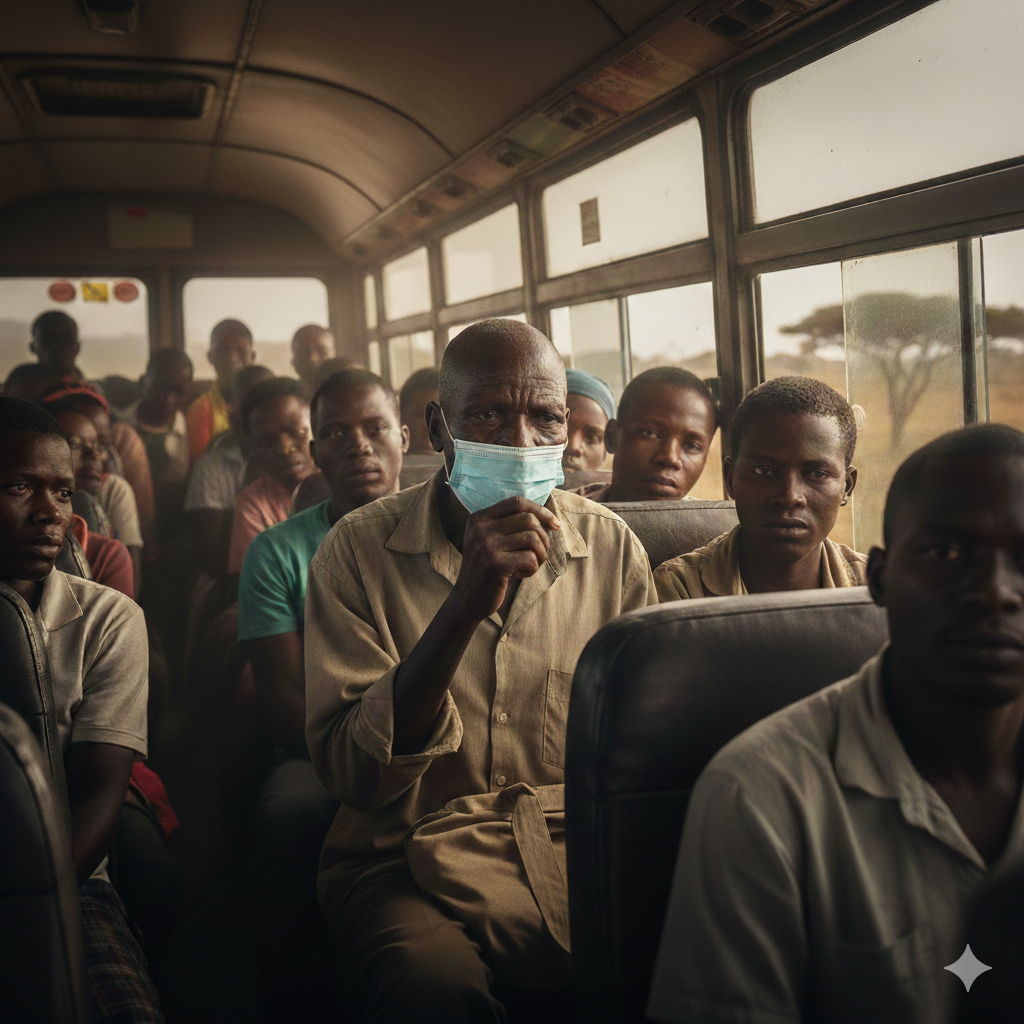
AI generated image of a Healthcare worker conducting TB screening in an African community.
The global tuberculosis (TB) crisis remains a significant threat to public health. In 2023, approximately 10.8 million people fell ill with the disease worldwide, resulting in 1.25 million deaths (1). While TB is a global issue, its impact is disproportionately high in certain regions. Sub-Saharan Africa contains only 14% of the world’s population, yet it accounted for 24% of all new TB cases and more than 33% of global TB deaths in 2023 (1).
The most urgent challenge in the African region is the detection gap. This is the difference between the number of people who are actually sick and those who receive a formal diagnosis. In 2023, an estimated 2.5 million people in the World Health Organization (WHO) African Region fell ill with TB (2). Of these, 1.9 million were diagnosed and started treatment, representing a 76% treatment coverage rate (2).
The remaining 24%, approximately 600,000 people, were never detected. This gap poses a severe risk to public health. Because TB is airborne, individuals without a diagnosis continue to live, work, and travel within their communities, unknowingly spreading the bacteria to family members and neighbors.
Recent data indicates that the African region is struggling to match global improvements in healthcare. By 2024, the global average for TB detection and treatment access reached 78% (3). Africa’s lower detection rate highlights a growing inequality in medical access. Additionally, global progress is currently threatened by significant funding shortages and the spread of drug-resistant strains of the disease (3).
This report examines five primary barriers preventing effective TB detection in Africa and analyzes how these obstacles hinder efforts to control the disease worldwide.

1. Diagnostic Infrastructure Limitations
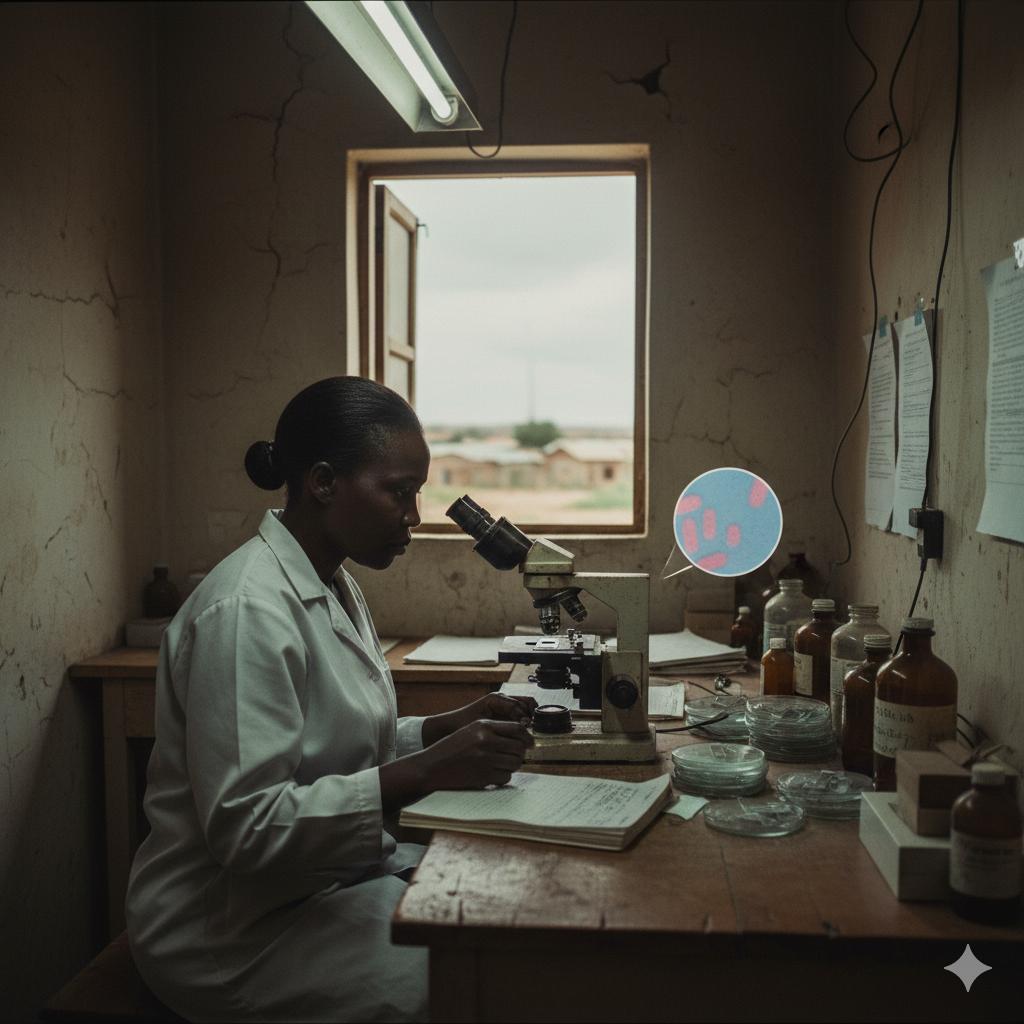
Tuberculosis is a bacterial infection that requires rapid molecular tests for an accurate diagnosis. However, access to these tools is severely limited across sub-Saharan Africa. A 2025 study in PLOS Global Public Health examined diagnostic progress across 24 African countries participating in the Laboratory Community of Practice (LabCoP) (4). The research found that only 61% of people with tuberculosis were tested using these recommended rapid tests in 2023 (4). This figure is well below the universal testing target of 100% by 2027 set by the United Nations (4).
Although the WHO recommended these rapid tools over a decade ago, only about one-third of diagnostic sites in high-burden countries can actually provide them (4). The study highlighted persistent infrastructure problems, such as unreliable electricity, cramped laboratory spaces, and a shortage of trained staff. In many rural or remote areas, these diagnostic facilities do not exist at all.
To better understand these challenges, researchers surveyed tuberculosis program staff – including diagnostic officers and laboratory heads – from Burundi, Cameroon, Democratic Republic of Congo, Guinea, Zambia, and Zimbabwe between June and July 2025 (4). The findings showed that even when diagnostic machines are donated to a country, systemic barriers stop them from being used effectively.
One of the biggest problems is sample transportation. Because facilities are so far apart, patients in remote villages must travel long distances to reach a clinic. Many cannot afford the cost of the bus fare or the time away from work. Consequently, many clinics still rely on an outdated method called sputum smear microscopy (5). This old approach is often inaccurate, especially for children or people with extrapulmonary tuberculosis (TB outside the lungs). Because microscopy fails to find the bacteria in people with low bacterial loads, it contributes directly to the growing detection gap (5).
Read: Malaria Resurgence in Africa
2. Healthcare System Barriers
Weaknesses within the healthcare system make diagnostic challenges even more difficult to solve. A 2025 analysis in Frontiers in Microbiology reviewed the tuberculosis burden across 22 sub-Saharan African countries (1). The research documented severe shortages of healthcare workers, frequent medicine shortages, and a lack of coordination between tuberculosis services and care for other chronic diseases. These factors lower the quality of service and prevent patients from getting a diagnosis, even when they manage to reach a clinic.
The study also found that the continued use of paper-based records in countries like Angola, Uganda, Malawi, Niger, and Zimbabwe lowers detection rates and leads to poor data quality (1). In Uganda, for example, the paper system can track if a patient finished their pills, but it often fails to record if the patient was actually “cured” through a follow-up lab test. This leads to inaccurate reporting. While digital systems are more accurate and easier to search, the switch from paper to digital has been slow.
Furthermore, fragmented care creates extra hurdles for patients. Unlike HIV patients, who often have several ways to get their medicine close to home, tuberculosis patients have fewer options (6). Patients are often forced to make long, expensive trips to crowded central hospitals every day to take their medicine under supervision. These costs and travel times cause many to stop treatment early. Mduduzi Mbatha, a tuberculosis manager in South Africa’s KwaZulu-Natal Department of Health, noted that while they want to move care closer to patients, they struggle with a lack of resources and difficulty keeping trained nurses at smaller, local clinics (6).
Finally, there is a missed opportunity for combined screening. Tuberculosis screening is often not well-integrated with HIV or diabetes programs, even though these diseases affect similar groups of people (7). This lack of coordination leads to delayed diagnoses, especially for people living with HIV, who are 15 to 22 times more likely to develop tuberculosis than those without HIV.
3. Tuberculosis-Related Stigma
Stigma represents one of the most significant yet least addressed barriers to tuberculosis detection, acting as a social wall that stops patients from accessing the care they need. A mixed-methods study in Khayelitsha, Western Cape, and Hammanskraal, Gauteng Province surveyed 93 people with tuberculosis and 24 caregivers of children with tuberculosis to understand these challenges (8). The study documented three distinct types of stigma among the respondents: anticipated stigma (the fear of being discriminated against), internal stigma (deep feelings of shame or negative self-worth), and enacted stigma (actual experiences of being treated badly by others).
These feelings have a direct impact on medical outcomes. A 2024 report by the Human Sciences Research Council (HSRC) documented that stigma frequently causes people with tuberculosis symptoms to disengage from care before even receiving their test results (9). Cultural factors further influence these manifestations and increase delays in care-seeking and transmission cycles. For instance, a cultural reliance on traditional healers – documented in 51.3% of Zambia’s Nubi community and widely observed in Ghana, often postpones biomedical intervention (1). This delay allows untreated cases to continue spreading the bacteria in communities while individuals pursue traditional remedies that do not effectively treat the infection.
Activist Phumeza Tisile, a multidrug-resistant tuberculosis survivor recognized on the TIME 100 list of emerging global leaders, highlighted the human cost of this issue at the 8th Annual TB Conference in June 2024 (9). She described how people regularly travel to clinics far outside their own communities to prevent neighbors from seeing them seek treatment, fearing that rumors would spread if they were seen at a local facility.
The research by Foster et al. (2023) further explains that this silence is often driven by intersectional stigma, where the fear of tuberculosis is tied to the fear of being suspected of having HIV or being judged for behaviors like smoking or drinking (8). To break these cycles, patients in the study emphasized the need for peer counseling led by tuberculosis survivors and community-wide education to replace fear with support.
Read: Why Adherence to HIV Medications Get Harder With Age
4. Economic and Geographic Barriers
Poverty and geographic isolation create strong obstacles to tuberculosis detection. Research in the Eastern Cape Province of South Africa, an area that ranked last in the country’s Human Development Index since 1990, documents how tuberculosis is linked to poverty, poor living conditions, and limited healthcare access (10). When a family member falls ill, the loss of income and the drain on household resources create severe financial strain.
Transportation costs are a major barrier documented across multiple studies. Patients in remote areas must pay high fares to reach health centers located long distances away (1). In a study on older adults in Uganda with both HIV and tuberculosis, researchers found that the ability to afford medications and transportation directly influenced how often patients engaged with healthcare (11). Similar patterns exist for tuberculosis diagnosis, where the cost of traveling to a testing facility prevents many people with symptoms from ever being tested.
The economic burden extends beyond direct costs. Tuberculosis patients who are unable to work during their six-month treatment may qualify for disability grants in South Africa, but these are difficult to obtain due to complex clinical evaluations (10). Temporary aid, such as the Social Relief of Distress grant, provides only minimal support. For households already living in poverty, the combination of lost wages and treatment-related costs creates an insurmountable barrier to seeking a diagnosis.
Malnutrition, a lack of essential nutrients, is also widespread in West Africa, especially in countries like Burkina Faso and Niger (7). Malnutrition is both a cause and a result of tuberculosis; it weakens the immune system and increases the risk of infection. Specifically, a lack of protein and energy impairs the body’s ability to produce the cells needed to fight off the bacteria (7). This creates a cycle where poverty makes a person more likely to get sick, the illness makes it impossible to work, and the worsening poverty prevents access to the very diagnosis and treatment needed to recover.
5. Funding Shortfalls and Program Disruptions
Financial constraints threaten tuberculosis detection efforts across the continent. The 2025 WHO Global Tuberculosis Report warns that cuts to Global Fund and United States government grants from 2025 onwards are already disrupting community engagement, screening, diagnosis, sample transport, and supply chains in several high-burden African countries (12). Funding for tuberculosis prevention, diagnosis, and treatment reached $5.9 billion globally in 2024, representing less than one-third of the $22 billion annual target set for 2027 (13).
This dependency on donor funding creates a significant vulnerability. In Mozambique, Zambia, and Niger, approximately 70% of tuberculosis program funding comes from the Global Fund (1). South Africa presents a different model, having funded 54% of tuberculosis programs domestically since 2015, setting a benchmark for the region (1). However, most countries lack this capacity to raise resources within their own borders.
The impending USAID funding cuts in 2025 pose particular threats to diagnostic services (1). Domestic funding, where it exists, typically covers basic costs such as healthcare worker salaries and first-line drugs. Gaps remain for advanced diagnostics and second-line treatment regimens, which are essential for detecting and treating drug-resistant tuberculosis. External support is needed for these components, otherwise detection capacity is expected to decline.
Experts warn that if funding continues to fall, it could lead to 2 million extra deaths by 2035 (13). This indicates that ending TB requires more than just medicine; it requires the financial support to maintain patient services and the community education necessary to end the shame associated with the disease.
Despite these challenges, the WHO continues to lead global efforts to eradicate the disease. Dr. Tereza Kasaeva, Director of the WHO Department for HIV, TB, Hepatitis, and STIs, stated:
“We are at a defining moment in the fight against TB. Funding cuts and persistent drivers of the epidemic threaten to undo hard-won gains, but with political commitment, sustained investment, and global solidarity, we can turn the tide and end this ancient killer once and for all.”
Related: Why Neglected Tropical Diseases Remain Underfunded in Africa
Progress Made in Africa in Tuberculosis Diagnosis and Treatment
Despite these substantial barriers, the WHO African Region has achieved measurable progress. Between 2015 and 2024, the region achieved a 28% reduction in the tuberculosis incidence rate and a 46% reduction in deaths (3). These figures represent some of the strongest results globally.
Furthermore, the rate of bacteriological confirmation – using lab tests to prove the presence of the bacteria – rose in Africa from approximately 65% in 2020 to 70% in 2024 (12).
Global coverage for rapid diagnostic testing also increased, moving from 48% in 2023 to 54% in 2024 (3). In the 24 African countries analyzed in the LabCoP study, 61% of people notified with tuberculosis were tested using WHO-recommended rapid diagnostics in 2023 (4). While this is higher than the global average of 48%, it remains below the universal access target of 100% set for 2027 (4). Notably, seven countries in that study achieved coverage above 80%, proving that high diagnostic rates are possible when resources and political commitment are prioritized.
Finally, treatment success rates show encouraging trends. Success in treating drug-susceptible tuberculosis has remained high, with a global rate of 88% (3). Additionally, the treatment success rate for drug-resistant tuberculosis improved from 68% to 71% in 2023 (3). As a result of these efforts, the number of people developing drug-resistant tuberculosis each year has begun to decline, with over 164,000 people receiving specialized treatment in 2024 (3).
The Path Forward in Closing the Tuberculosis Detection Gap in Africa
Closing the 24% detection gap in Africa requires coordinated action across several areas. First, infrastructure investment must prioritize moving rapid molecular tests into rural and underserved areas. This must be supported by reliable electricity, trained staff, and steady supply chains for laboratory materials. Additionally, sample transportation networks need to be strengthened so that people living in isolated areas can still have their tests processed at central labs.
Second, healthcare system reforms should focus on moving tuberculosis services into local, primary healthcare clinics. This decentralization reduces the travel burden on patients and makes it easier to get help. Screening for tuberculosis should also be combined with HIV care, diabetes treatment, and maternal-child health services to find more cases efficiently. To improve accuracy, digital tracking systems should replace hand-written paper logs, allowing doctors to monitor patient progress in real-time.
Third, reducing stigma requires action at many levels. Community education campaigns are needed to correct myths about how tuberculosis spreads and to emphasize that it is curable. Training for healthcare workers should focus on stopping discriminatory behaviors that scare patients away from clinics. Support groups led by tuberculosis survivors can also help by providing a trusted voice to challenge shame and support those who are newly diagnosed.
Fourth, economic barriers must be addressed through social support. Providing bus fare subsidies or using mobile diagnostic vans can reduce costs for people in remote areas. Nutrition programs should be part of the treatment plan, as healthy food helps the medicine work. Furthermore, providing disability grants or income support to families affected by tuberculosis can prevent the financial collapse that often leads patients to stop taking their medicine.
Lastly, countries must work toward using their own domestic money rather than relying on international donations. Governments should create specific budget lines for tuberculosis and find new ways to fund these programs locally. South Africa’s success in funding 54% of its own tuberculosis programs shows that this is possible. Working together through the African Union could also help countries share resources and fight the disease across borders.
Conclusion
The 600,000 undetected tuberculosis cases in Africa in 2023 represent more than just statistics. Each case is a person coughing in a crowded minibus, sharing meals with family, and unknowingly spreading an infectious disease that kills over 400,000 Africans every year.
Closing the detection gap is not just a technical or medical challenge. It requires a combined effort to break down the connected barriers – inadequate testing tools, broken healthcare systems, deep social stigma, extreme poverty, and a lack of funding – that keep tuberculosis hidden in African communities. By addressing these issues together, the region can find the missing cases and move closer to ending the epidemic.
References
1. Li S, Mensah E, Liu M, Pan L, Lu W, Zhou S, et al. The burden of tuberculosis and drug resistance in 22 Sub-Saharan African countries, 1990–2021: a GBD 2021 analysis and progress towards WHO 2035 targets with projections to 2050. Front Microbiol [Internet]. 2025 Nov 16 [cited 2026 Feb 11];16:1695592. Available from: https://www.frontiersin.org/journals/microbiology/articles/10.3389/fmicb.2025.1695592/full
2. Iragena JD, Katamba A, Affolabi D, Joloba M, Ssengooba W. Tuberculosis laboratory capacity building in the WHO African Region: The past, the present and the future: A Viewpoint. PLOS Global Public Health. 2025 Nov 11;5(11):e0004979. Available from: https://journals.plos.org/globalpublichealth/article?id=10.1371/journal.pgph.0004979
3. European AIDS Treatment Group. WHO Global TB Report 2025: Global gains in TB response endangered by funding challenges [Internet]. Brussels: EATG; 2025 Nov 20 [cited 2026 Feb 11]. Available from: https://www.eatg.org/hiv-news/who-global-tb-report-2025-global-gains-in-tb-response-endangered-by-funding-challenges/
4. Mupfumi L, Nyondo T, Mzyece J, Kampira V, Condé M, Aloni ML, Manga HA, Ndayihimbaze J, Ki-Zerbo CL, Njab J, Bih C. Reaching the 100 by 2027 target for universal access to rapid molecular diagnostic tests for tuberculosis in Africa: In-sight but out of reach. PLOS Global Public Health. 2026 Jan 27;6(1):e0005176. Available from: https://journals.plos.org/globalpublichealth/article?id=10.1371/journal.pgph.0005176
5. Scott GY, Aborode AT, Adesola RO, Benson K, Omulepu I, Ajayi OO, Nibokun EO, Somuah DK, Nkhoma F, Omole GD, Omeoga CH. Diagnostic innovations for tuberculosis in sub-Saharan Africa. Discover Public Health. 2025 Apr 25;22(1):188. Available from: https://link.springer.com/article/10.1186/s12982-025-00593-8
6. Médecins Sans Frontières. Five deadly barriers to effective TB care – South Africa [Internet]. ReliefWeb; 2018 Mar 23 [cited 2026 Feb 12]. Available from: https://reliefweb.int/report/south-africa/five-deadly-barriers-effective-tb-care
7. Osei-Wusu S, Asare P, Danso EK, Asogun D, Otchere ID, Asante-Poku A, et al. Addressing key risk factors hindering tuberculosis control activities in West Africa – progress in meeting the UN sustainable development goals. IJID Reg [Internet]. 2025 Mar 19 [cited 2026 Feb 12];14(Suppl 2):100594. Available from: https://pmc.ncbi.nlm.nih.gov/articles/PMC11973648/
8. Foster I, Biewer A, Vanqa N, Makanda G, Tisile P, Hayward SE, et al. “This is an illness. No one is supposed to be treated badly”: Community-based stigma assessments in South Africa to inform TB stigma intervention design. Res Sq [Preprint]. 2023 Dec 11:rs.3.rs-3716733 [cited 2026 Feb 12]. Available from: https://pmc.ncbi.nlm.nih.gov/articles/PMC10760241/
9. Human Sciences Research Council (HSRC). Unseen barriers: hidden TB stigma and its impact on treatment adherence [Internet]. Pretoria: HSRC; 2024 Oct 21 [cited 2026 Feb 12]. Available from: https://hsrc.ac.za/news/review/unseen-barriers-hidden-tb-stigma-and-its-impact-on-treatment-adherence/
10. Medina-Marino A, de Vos L, Daniels J. Social isolation, social exclusion, and access to mental and tangible resources: mapping the gendered impact of tuberculosis-related stigma among men and women living with tuberculosis in Eastern Cape Province, South Africa. BMC Glob Public Health [Internet]. 2025 Jun 5 [cited 2026 Feb 12];3:50. Available from: https://pmc.ncbi.nlm.nih.gov/articles/PMC12142910/
11. Ssonko M, Stanaway F, Mayanja HK, Namuleme T, Cumming R, Kyalimpa JL, Karamagi Y, Mukasa B, Naganathan V. Polypharmacy among HIV positive older adults on anti-retroviral therapy attending an urban clinic in Uganda. BMC geriatrics. 2018 May 29;18(1):125. Available from: https://link.springer.com/article/10.1186/s12877-018-0817-0
12. Caelers D. Africa exceeds global tuberculosis targets, despite funding squeeze [Internet]. Nature (news); 2025 Nov 12 [cited 2026 Feb 13]. Available from: https://www.nature.com/articles/d44148-025-00357-1
13. World Health Organization (WHO). Global gains in tuberculosis response endangered by funding challenges [Internet]. Geneva: WHO; 2025 Nov 12 [cited 2026 Feb 13]. Available from: https://www.who.int/news/item/12-11-2025-global-gains-in-tuberculosis-response-endangered-by-funding-challenges
About the Author