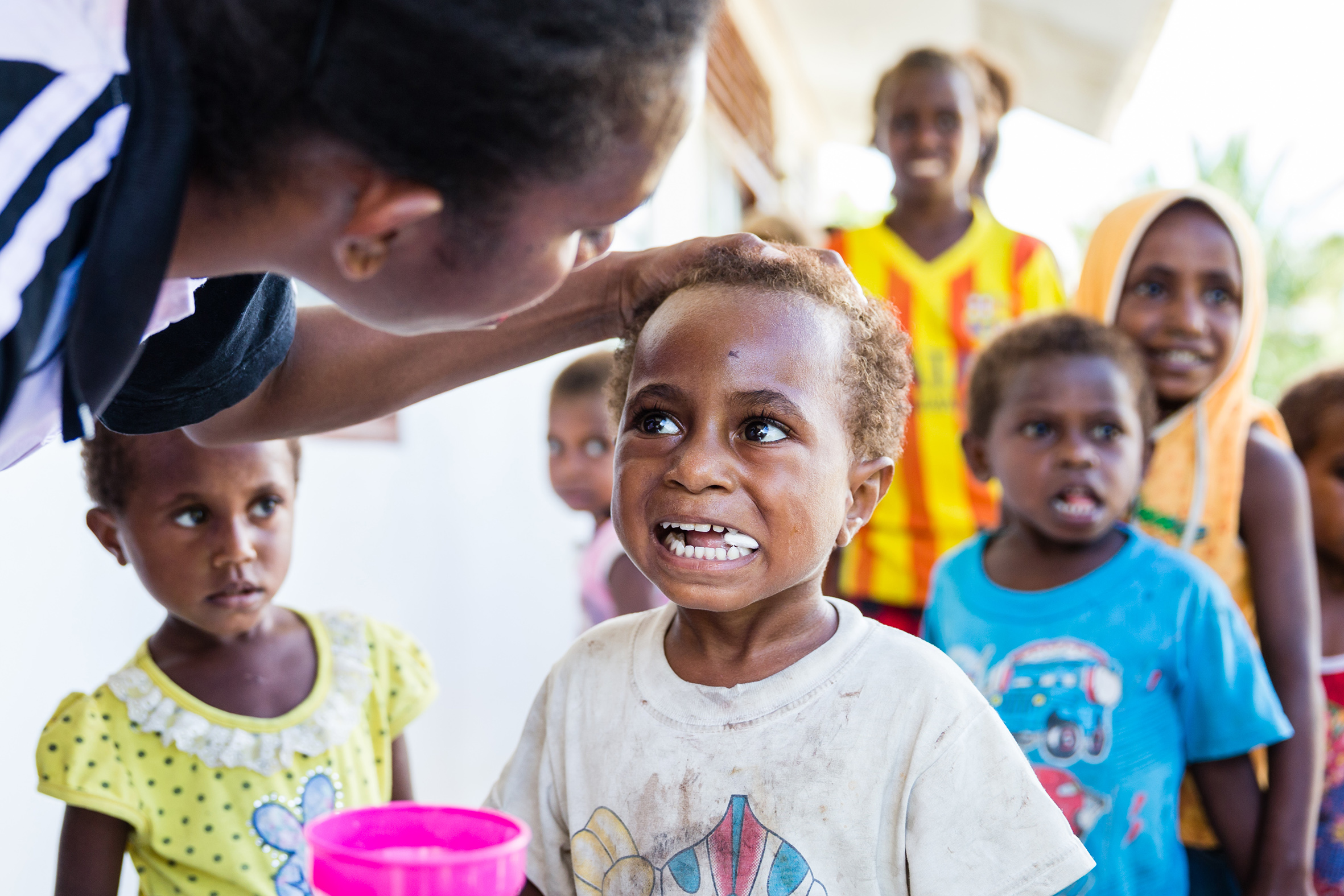
African community health worker administering neglected tropical disease medication to children during a mass drug administration campaign in a rural village. Credit| World Health Organisation
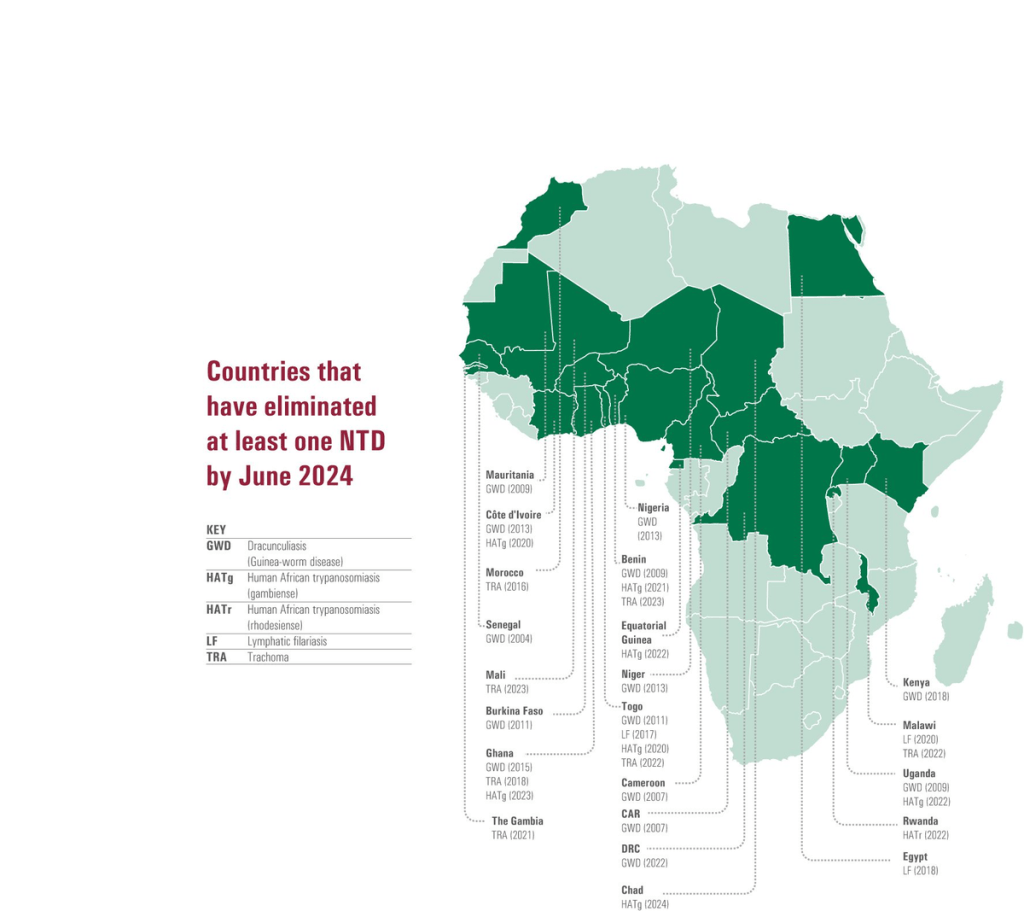
Every dollar invested in fighting Neglected Tropical Diseases (NTDs) returns twenty-five dollars in benefits to affected individuals (1). Nigeria alone could gain nineteen billion dollars in economic productivity by 2030 through meeting NTD elimination targets (2). Twenty-four African countries have eliminated at least one NTD as of August 2025, demonstrating that effective drugs and delivery systems exist (3).
However, over 55 million NTD treatment tablets risked expiring unused in Africa in 2025 (4). Despite proven cost-effectiveness, NTD interventions remain chronically underfunded. Africa carries 40 percent of the global NTD burden, affecting over 500 million people (3). Ninety-nine million people in 26 African countries risk missing treatment for lymphatic filariasis, onchocerciasis, soil-transmitted helminthiases, and schistosomiasis due to insufficient funding (1).
The Donor Funding Collapse For Neglected Tropical Diseases
In January 2025, the United States government froze $114.5 million appropriated by Congress for the United States Agency for International Development (USAID) NTD Program (5). This program has delivered 3.3 billion treatments to 1.7 billion people affected with NTDs across 26 countries over 20 years (4).
This funding freeze had immediate consequences. Forty-seven mass treatment campaigns were delayed (4). Health workers in over half of the affected countries lost employment. Critical medicine shortages developed across multiple countries.
Dr. Virginie Troare, a physician and public health coordinator at Family Health International 360, oversaw mass drug administration, treatment, and surveillance efforts in Côte d’Ivoire. She had managed programs targeting trachoma and lymphatic filariasis elimination (6). The funding termination halted a decade of programmatic investment toward eliminating these two diseases.
The suspension of the United States funding occurred alongside other significant budgetary reductions.In 2021, the United Kingdom ended its flagship NTD initiative, the ASCEND programme (4). Within the 2 years this ASCEND program ran, it delivered over 282 million treatments to approximately 117 million people affected by NTDs and successfully trained more than 841,400 health workers (7).
Between 2023 and 2024, medicine distributions dropped by 250 million doses. This was attributed partly to reduced funding in several countries (8).
The Pharmaceutical Donation Model Breakdown
NTD programs operated on a specific support model. For every dollar of United States government funding, pharmaceutical companies donated twenty-six dollars worth of medicines (5). Between 2011 and 2025, companies including Bayer AG, GlaxoSmithKline (GSK), Johnson & Johnson, Merck, Novartis, Pfizer, and Sanofi donated drugs cumulatively valued at over twelve billion dollars (4).
The pharmaceutical donation model worked as shown in figure 2.

Donors funded distribution costs, pharmaceutical companies donated the drugs, and countries provided health workers and infrastructure. This division of responsibility produced one of the most cost-effective large-scale interventions in global health history.
Pharmaceutical firms guarantee delivery to national storehouses. However, distribution depends on external funding and local capacity (5). Without distribution networks, donated medicines sit unused. In 2025 alone, over 55 million NTD tablets expired in Africa because the systems to deliver them no longer exist (4). Another 880 million treatments valued at $975 million slated for distribution in 2025 faced uncertain futures.
This breakdown demonstrates a structural vulnerability in NTD program design. Programs dependent on external funding lack sustainability when donor support is withdrawn.
Insufficient African Government Funding
NTD burden costs Africa thirty-three billion dollars annually in lost household income from out-of-pocket health expenditures and wages (1). Ethiopia, Kenya, Rwanda, and Zimbabwe could collectively secure over five billion dollars from eliminating just two prevalent NTDs (2).
The economic case for investment is clear.Yet, domestic government funding for NTDs remains minimal across most of the continent because NTDs lack dedicated funding mechanisms.
Tanzania demonstrates what domestic commitment could achieve. In 2024, the country reached more than twenty million people with preventive treatments (2). Tanzania achieved a 93 percent decrease in people requiring lymphatic filariasis interventions since 2012. The Ministry of Health is preparing proposals for the 2025-2028 International Development Association (IDA21) cycle to secure World Bank funding for NTD elimination.
Political Invisibility of Neglected Tropical Diseases
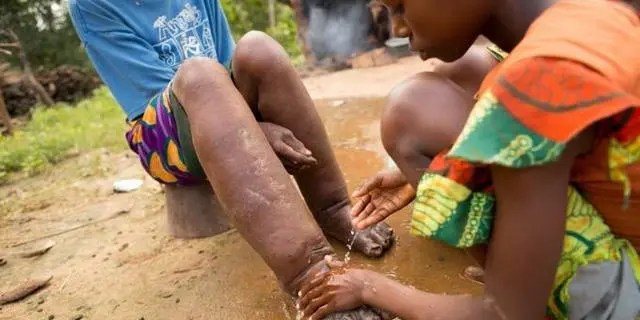
NTDs mostly affect the poorest and most marginalized people. They cause disability, disfigurement, cognitive impairment in children, and lost productivity. However, they rarely kill quickly. They do not create the pandemics that dominate news cycles. They do not generate the political urgency that mobilizes resources.
Twenty of the 21 NTDs identified by the World Health Organization are found in Africa. More than three-quarters of African nations are co-endemic for at least five NTDs. Lymphatic filariasis, onchocerciasis, soil-transmitted helminthiasis, schistosomiasis, and trachoma make up around 90 percent of the continent’s NTD burden (3).
These diseases remain politically invisible. They affect populations with minimal lobbying power and occur in remote areas with inadequate healthcare infrastructure and limited skilled workers. The affected populations have minimal influence in budget allocation decisions.
Low political visibility results in reduced funding allocations. Insufficient funding perpetuates disease burden among marginalized populations. This continued burden among politically marginalized groups reinforces exclusion from policy priorities.
Risk of Reversal in Progress of Neglected Tropical Diseases Elimination
NTD elimination requires sustained treatment over years. Stopping too early allows transmission to resume. Forty-two African countries have been certified free of Guinea worm. Six countries eliminated trachoma as a public health problem. Togo became the first African country to eliminate four NTDs in 2022 (1). These achievements required decades of consistent effort.
The funding cuts threaten to undo this progress. Diseases that were nearly eliminated could resurge. Populations that were treatment-free could become endemic again. Current concerns extend beyond programme stagnation to potential reversal of achieved progress.
Without NTD elimination, Africa cannot achieve Universal Health Coverage (UHC) or meet the Sustainable Development Goals (SDGs) (3). The 2030 WHO target of 100 countries eliminating at least one NTD currently stands at 56 countries as of May 2025 (4). This target now looks increasingly unreachable.
Non-Implementation of Available Solutions
The solutions exist. African governments could establish dedicated national budget lines for NTD elimination, as Tanzania is attempting. Ministries of Health and Finance could work together to include NTDs in IDA21 funding requests. Countries could integrate NTDs programming into national health systems instead of relying on vertical, donor-funded programs (2).
Regional funding mechanisms could be created. African pharmaceutical companies could be supported to manufacture NTD treatments locally. Community health worker networks could be strengthened to deliver services without external contractors.
None of this is happening at scale. Countries are actively seeking identify alternative funding, mobilize national resources, and integrate NTD campaigns into broader health initiatives (4). These strategies, though critical, cannot replace the systematic investment that disappeared.
Conclusion
Neglected Tropical Diseases (NTDs) are a group of over 20 bacterial, viral, parasitic, and fungal infections, plus venomous attacks, that disproportionately affect over a billion impoverished people in tropical regions, causing chronic illness, disability, stigma, and poverty.
However, migration occurs from rural to urban areas. From impoverished countries to more affluent ones. Onchocerciasis and other NTDs do not respect borders. The lesson from Ebola and Coronavirus Disease 2019 (COVID-19) was clear. Infections do not stay where they start.
The cost of NTD underfunding manifests in multiple ways. Cognitive impairment prevents children from attending school. Disfigurement and stigma reduce workers’ earning capacity. Preventable disease burdens weaken health systems. Communities experience sustained cycles of poverty and illness.
Twenty-four African countries have demonstrated that NTD elimination is achievable with sustained investment. Pharmaceutical donations provide necessary medications. Economic returns on investment are documented. Distribution infrastructure exists in many settings. The primary barrier remains insufficient political commitment to fund proven interventions. Without increased political will and dedicated funding mechanisms, NTD programs will continue to receive inadequate resources.
References
1. WHO Regional Office for Africa. Funding crisis threatens Africa’s fight against neglected tropical diseases [Internet]. Brazzaville: WHO | Regional Office for Africa; 2025 Jun 5 [cited 2026 Jan 22]. Available from:https://www.afro.who.int/news/funding-crisis-threatens-africas-fight-against-neglected-tropical-diseases
2. Mhagama J. Innovative financing can beat Africa’s neglected tropical diseases. African Business [Internet]. 2025 Aug 28 [cited 2026 Jan 22]. Available from: https://african.business/2025/08/finance-services/innovative-financing-can-beat-africas-neglected-tropical-diseases
3. Chironda M. Africa: Despite progress, funding cuts threaten to reverse Africa’s fight against neglected tropical diseases. allAfrica.com [Internet]. 2025 Oct 1 [cited 2026 Jan 22]. Available from: https://allafrica.com/stories/202510010287.html
4. World Health Organization. Neglected tropical diseases further neglected due to ODA cuts [Internet]. Geneva: World Health Organization; 2025 Jun 4 [cited 2026 Jan 22]. Available from: https://www.who.int/news/item/04-06-2025-neglected-tropical-diseases-further-neglected-due-to-oda-cuts
5. Schreiber M. Billions in free drugs but no way to deliver them? Fear grows over USAID cuts. NPR [Internet]. 2025 Jun 5 [cited 2026 Jan 22]. Available from: https://www.npr.org/sections/goats-and-soda/2025/06/05/g-s1-70255/neglected-tropical-diseases-usaid-cuts-pharmaceuticals
6. Blue Ridge Public Radio. Trump funding cuts to global health hit North Carolina nonprofits like FHI 360 [Internet]. Asheville (NC): BPR; 2025 Jun 18 [cited 2026 Jan 22]. Available from: https://www.bpr.org/text/2025-06-18/trump-funding-cuts-global-health-north-carolina-nonprofits-fhi360
7. Jones I, Downs P. Leveraging resources and the impact of neglected tropical disease elimination programmes: getting (much) more than what you pay for. International Health. 2022 Sep;14(Supplement_2):ii67-9.
8. World Health Organization. Report of the eighteenth meeting of the Strategic and Technical Advisory Group for Neglected Tropical Diseases [Internet]. Geneva: World Health Organization; 2025 [cited 2026 Jan 22]. Available from: https://www.who.int/publications/i/item/9789240112285
About the Author




3 thoughts on “Why Neglected Tropical Diseases in Africa Remain Underfunded”