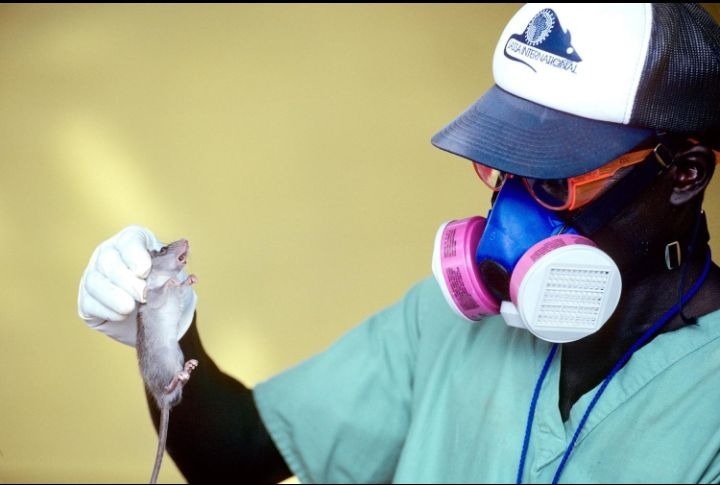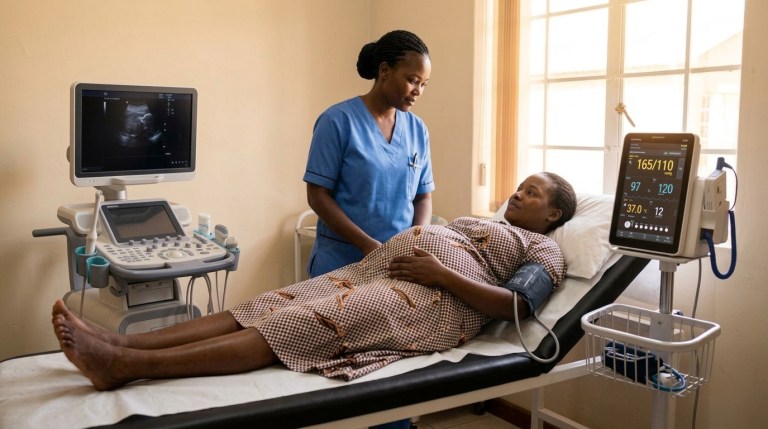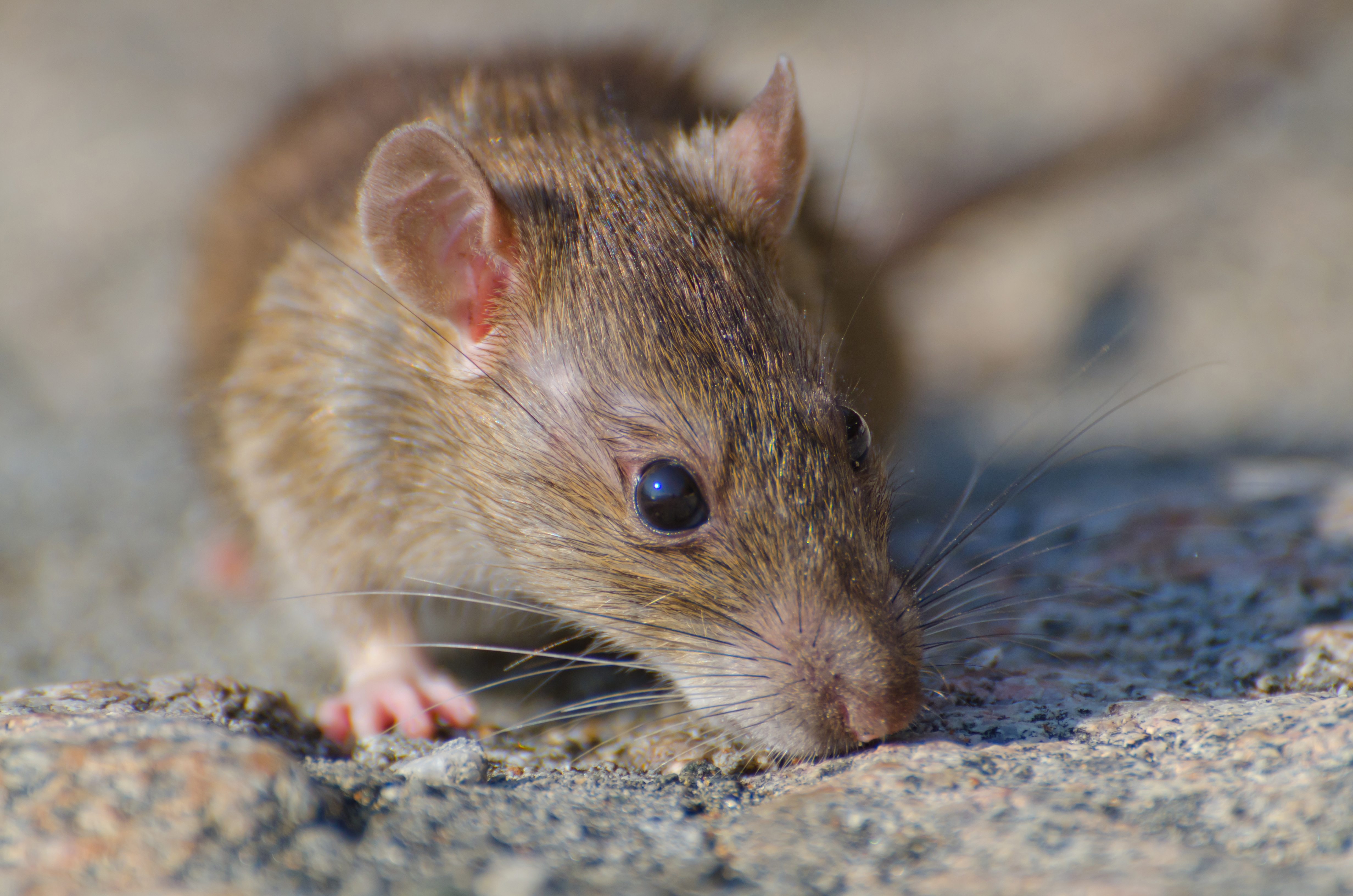
A closeup selective focus shot of a brown rat on the concrete ground
Introduction: The Resurgence Of Lassa Fever in Nigeria.
Nigeria is currently experiencing a comeback of Lassa fever, with over 160 suspected cases, 44 new confirmed cases, and 6 new confirmed deaths as of week 5 in the Lassa fever situation report for 2026. Cumulatively, as of week 5 2026, there have been a total of 754 suspected cases, 165 confirmed cases, 4 probable cases, and 31 deaths reported, with a Case Fatality Rate (CFR) of 18.8%, which is lower than the CFR for the same period in 2025 (19.6%).
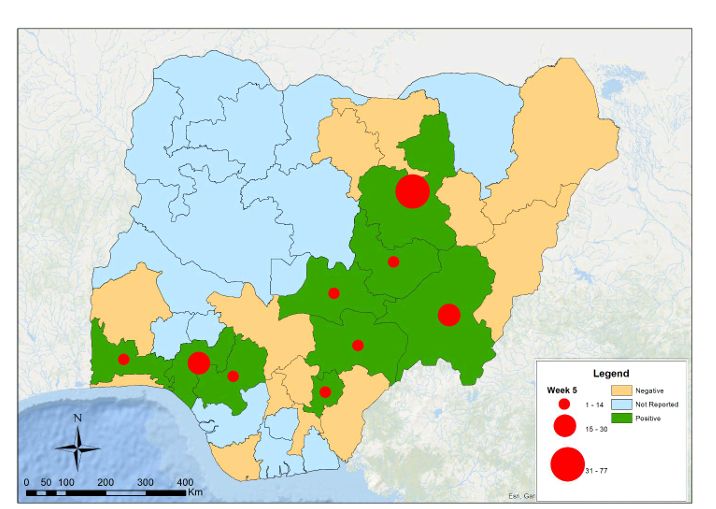
An Image illustrating the confirmed Lassa fever cases by states in Nigeria, week 5, 2026
9 out of 36 states have recorded at least one confirmed case across 33 Local Government Areas. A high proportion of the confirmed Lassa fever cases (92%)were reported from 5 states, with Bauchi reporting 47%, Ondo 18%, Taraba 14%, Edo 8%, and Plateau 5%. Of the remaining 8%, which was confirmed in 4 states confirmed it (1).
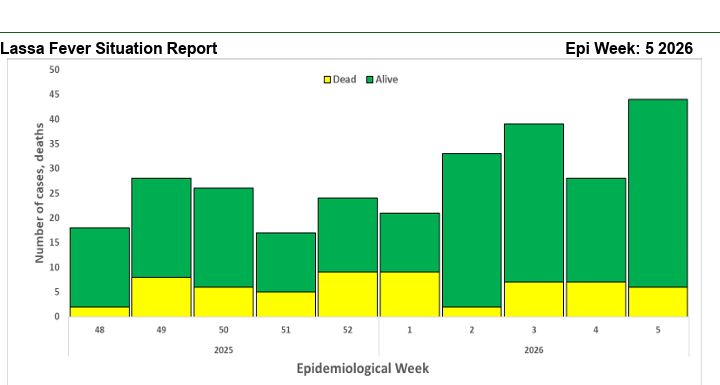
An illustration of the confirmed Lassa Fever Cases in Nigeria epidemiological week 5, 2026
Lassa fever is readily endemic in Nigeria and in a huge part of West Africa, where the multimammate rat happens to be a natural reservoir for the Lassa virus. An immediate response to this endemic crisis is challenging due to other ongoing humanitarian crises and security challenges that the country is facing [2].
From the current situation report of week 5, one new health worker was affected, and the predominant age group affected is between 21 and 30 years of age, with a range of 1 to 74 years, and the median age is 28 years, with a male-to-female ratio for confirmed cases of 1:0.8 [1].
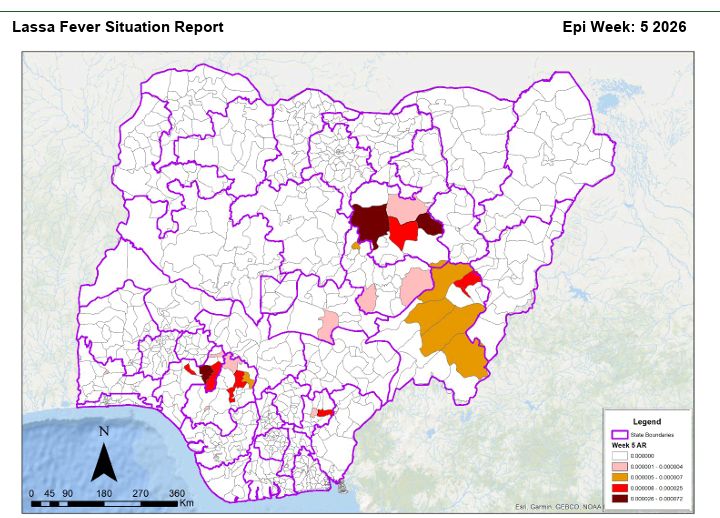
An image of the Nigeria map clearly highlighting the areas of confirmed Lassa fever attack rate per 100,000 population for LGAs in Nigeria, week 5, 2026.
What is Lassa Fever?
Lassa fever is an acute viral haemorrhagic disease caused by the Lassa virus. The virus is a member of the Arenaviridae viral family. In Sub-Saharan Africa, the “multimammate rat” (Mastomys natalensis, or Mastomys) is the vector of its propagation. As of right now, the Lassa virus is only known to infect West African multimammate rats.
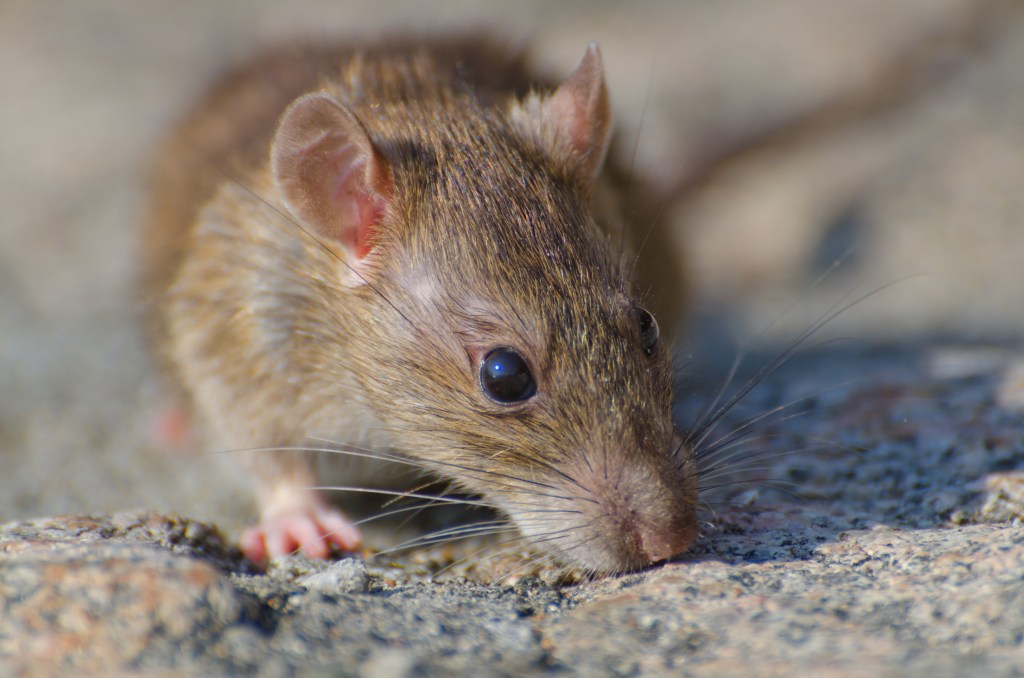
Close-up selective focus image of a brown multimammate rat on the concrete ground. Image credit: Freepik
Parts of West Africa, like Sierra Leone, Liberia, Guinea, and Nigeria, are said to have a prevalence of Lassa fever. It is also characterized by seasonal outbreaks which peak during the dry season months of December to March [3][4][5].
History of Lassa Fever in Nigeria
In 1969, the first discovery of Lassa fever was made in Nigeria in a town called Lassa. And since then, there has been a significant increase in the number of Lassa fever cases, which is evident in both the disease’s incidence and geographic distribution. At first, outbreaks mostly happened in northern Nigeria, with a few cases in the eastern states. However, 1989 signalled the beginning of outbreaks in the south-south zone, with Edo State recording the most outbreaks then.
1 to 4 states reported cases of Lassa fever between 1969 and 1989, and as of 1996, there has been an increase in the number of states affected, with outbreaks reported in all six geopolitical zones [4].
And for the recent trend from week 5 of 2026, Bauchi State, followed by Ondo State , is reported to have the highest cumulative number of suspected and confirmed cases [1].
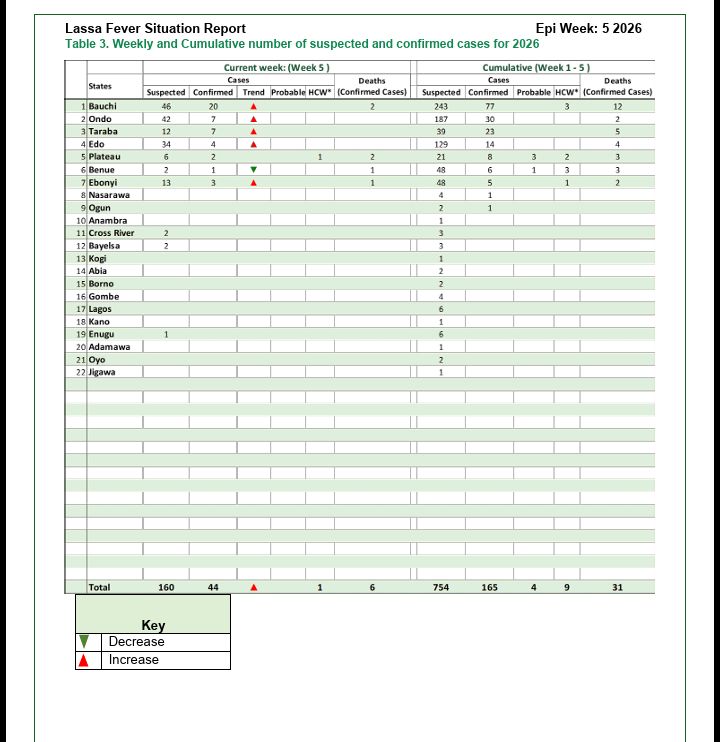
Lassa fever situation report illustrating Bauchi State as having the highest cumulative number of cases.
A young female doctor in Plateau State, with the name Salome Oboyi, was also reported to have lost her life on Monday, February 2, 2026, to Lassa fever, having contracted it from a patient under her custody.
How Does Lassa Fever Spread?
The main cause of Lassa fever is the Lassa virus itself, which is spread by rodents. It is transmitted from rodents to humans and also through human-to-human transmission, with rodents being the primary reservoir. Therefore, Lassa fever spreads when the urine and faeces of these rodents come in close contact with the food or household items, or through direct contact with the rats themselves.
Thus, Lassa fever can be contracted;
- By touching contaminated objects Eating contaminated foods
- Eating the rodents themselves
- Through human-to-human contact with the blood, faeces, and urine of someone infected
- By breathing in infected urine and droppings
- Through open wounds
- In healthcare settings, there is a risk of contamination through contaminated medical equipment and not using personal protective equipment.
Shaking, hugging, or sitting close to someone infected does not give Lassa fever [3][5].
Signs and symptoms of Lassa fever
The incubation period of Lassa fever is about 6 to 21 days before the actual signs and symptoms appear.

Symptoms include:
- Fever Headache
- Sore throat
- General body weakness
- Cough
- Nausea and vomiting
- Diarrhoea
- Muscle aches
- Chest pain
- Bleeding from the mouth, nose, ears, eyes, and other body openings in extreme cases.
80% of them do not develop symptoms, 15% of them die in hospital care, and the remaining develop multisystem disease [6].
Diagnosis and Testing Of Lassa Fever
It can be quite challenging to differentiate between Lassa fever and other febrile illnesses such as malaria, influenza, dengue, yellow fever, and typhoid fever, which present with the same signs and symptoms. However, taking a detailed history of the patient in the hospital will help in exposing any history of contact with rodents or with someone infected.
Meanwhile, to make a definitive diagnosis of Lassa fever requires laboratory testing whereby viral isolation in cell culture is the “gold standard” for the diagnosis of Lassa fever; other tests include reverse transcriptase polymerase chain reaction (RT-PCR) assay, IgG and IgM antibodies enzyme-linked immunosorbent assay (ELISA), and antigen detection tests [3][6][7].
Treatment of Lassa fever
“Lassa fever can be treated”.
And it will first begin with supportive management such as rehydration to control the fluid and electrolyte imbalance in the body, checking the blood to be sure it clots well, using dialysis if the kidneys become weak, and giving antibiotics ahead of time to stop infections. Then followed the treatment of the common symptoms such as headaches and vomiting [6][7].
The frequently used treatment of Lassa fever is said to be ribavirin. However, research has shown some controversy on its efficacy in some patients for the treatment of Lassa fever. Due to its teratogenic and embryotoxic effects, the risks of treatment have to be weighed in pregnant and breastfeeding mothers [8].
Another drug known as Favipiravir is effective in treating Lassa fever when combined with Ribavirin. Even though many other drugs are still undergoing clinical trials, ribavirin has been known as the traditional form of treating Lassa fever [6].
According to the World Health Organization, “There is currently no licensed vaccine for Lassa fever, but several potential candidate vaccines are in development ”.
And the antiviral drug ribavirin can only be effective if given early in the course of the illness [2][3].
Complications of Lassa Fever
Most survivors of Lassa Fever come down with hearing loss, and hearing returns after 1-3 months in only 50% of these patients. Memory loss, neuromuscular pain, and ataxia are also present [6].According to the Centers for Disease Control, pregnant women who get infected with the Lassa fever virus have a high risk of having a miscarriage, and about 95% of foetuses do not survive [3].
Who is at Risk of contracting Lassa fever?
According to the Nigerian Center For Disease Control NCDC.
People Most At Risk For Lassa Fever Include: [9]
- People of various age groups who come in contact with the urine, faeces, saliva, or blood of infected rats.
- Those who live in an environment that’s rat-infested.
- Those who consume food that is contaminated, especially that which is left open overnight or dried outside in the open.
- Those people who handle or process rodents for consumption.
- Those people who do not wash their hands at appropriate times.
- People who take care of infected persons without proper infection prevention and control measures. Healthcare workers including:
- Health workers who provide care to patients in the absence of standard precautions.
- Hospital staff who clean and disinfect contaminated surfaces, materials, and supplies without adequate protective gear.
- Laboratory staff who mishandle blood samples of suspected Lassa fever patients.
- Persons who prepare and handle bodies of deceased Lassa fever cases without appropriate precautions.
An analysis on the ‘Awareness and perception of lassa fever among some study participants’ revealed that those with a tertiary level of education and with prior knowledge about Lassa Fever have a lower risk of contracting it compared to those who are uneducated and ignorant.
How to prevent and control Lassa fever.
The mastomy rats are in high numbers in endemic areas, and the complete elimination of them is not possible;, therefore, the following preventive measures should be considered:; [5].
1) Reducing contact with rodents
Lassa fever can be prevented by limiting contact with rats. Communities should maintain good hygiene to keep rodents away from homes. This includes storing food in rodent-proof containers, keeping houses clean, disposing of waste far from living areas, and cooking food properly.
2)Preventing spread in healthcare settings
Healthcare workers must always follow infection prevention rules, such as regular handwashing, proper use of protective equipment, respiratory hygiene, and safe injections. When treating suspected or confirmed Lassa fever patients, extra care is needed to avoid contact with blood, body fluids, clothing, and bedding. Laboratory samples should only be handled by trained staff in well-equipped facilities.
3)Early detection and care
Early recognition of symptoms improves survival and reduces spread. In high-risk areas, health workers should be alert for signs of Lassa fever, especially during outbreaks. Family members should avoid contact with body fluids when caring for sick people. Suspected patients should be quickly referred to specialized treatment centers.
4)Lassa fever in travelers
Although rare, Lassa fever can occur in travelers returning from endemic regions. Doctors should consider it in patients with fever who have visited West Africa, especially if they were exposed in high-risk areas. Suspected cases should be reported immediately for expert advice and testing.
Challenges Faced in Nigeria in Controlling Lassa Fever
From the recent Lassa fever situation report from the NCDC, the following challenges are faced [1].
- Cases that are presented late result in a higher case fatality rate (CFR).
- Due to the high expense of Lassa fever treatment and clinical management, poor health-seeking behaviour is in high-burden communities.
- Poor environmental sanitation conditions were noted.
- There is a lack of understanding in high-burden communities.
- A growing number of infected healthcare workers.
What to Do If You Suspect Lassa Fever As A Nigerian
The NCDC advised that Nigerians should visit the nearest health care facility if they notice any of the signs and symptoms of Lassa fever or call the NCDC’s toll-free number, 6232, or your State Ministry of Health hotline to report any suspected cases.
Secondly, self-medication should be discouraged to ensure proper diagnosis and treatment.
Thirdly, health workers should always be alert to suspect any case of Lassa fever when they see patients present with symptoms of febrile illness.
Lastly, to guarantee timely diagnosis, referral, and the early start of public health measures, healthcare practitioners should notify their local government’s Disease Surveillance and Notification Officer of any suspected Lassa fever patients [9].
Conclusion
Lassa Fever is an acute viral haemorrhagic disease that was first discovered in 1969 in Nigeria. It is endemic in some countries of West Africa. For example, Benin, Ghana, Guinea, Liberia, Mali, Sierra Leone, and Nigeria. The multimammate rat happens to be a reservoir for the Lassa virus, which causes Lassa fever. And Lassa fever can be contracted through direct contact with the rodents or through contaminated foods and household items with their urine and faeces. It can also be contracted through human-to-human contact with those affected with Lassa fever.
Its signs and symptoms come with fever, general weakness, nausea and vomiting, headaches, sore throat, muscle pain, chest pain, diarrhoea, cough, and abdominal pain may follow. Bleeding from the mouth, nose, or other body openings. Ribavirin has been known as the traditional form of treatment for Lassa Fever, but research has shown some controversies in its efficacy on some patients.
Therefore, it is advised to report early to the hospital if any of the symptoms appear and persist. Communities should practise good hygiene, and healthcare workers should always be alert and use protective equipment where necessary to reduce the incidence of Lassa fever in the country.
References
- Nigeria Centre for Disease Control and Prevention. An update of Lassa fever outbreak in Nigeria [Internet]. Abuja: NCDC; 2026 [cited 2026 Feb 15]. Available from: https://ncdc.gov.ng/diseases/sitreps/?cat=5&name=An+update+of+Lassa+fever+outbreak+in+Nigeria&utm_
- World Health Organization (WHO). Lassa fever – Nigeria [Internet]. Geneva: WHO; 1 May 2023 [cited 2026 Feb 15]. Available from: https://www.who.int/emergencies/disease-outbreak-news/item/2023-DON463
- Centers for Disease Control and Prevention. About Lassa fever [Internet]. Atlanta (GA): CDC; 2024 [cited 2026 Feb 15]. Available from: https://www.cdc.gov/lassa-fever/about/index.html
- Asogun D, Arogundade B, Unuabonah F, Olugbenro O, Asogun J, Aluede F, et al. A review of the epidemiology of Lassa fever in Nigeria. Microorganisms [Internet]. 2025;13(6):1419. Available from: http://dx.doi.org/10.3390/microorganisms13061419
- World Health Organization (WHO). Lassa fever: fact sheet [Internet]. Geneva: WHO; 5 December 2024 [cited 2026 Feb 15]. Available from: https://www.who.int/news-room/fact-sheets/detail/lassa-fever
- Efe UO, Edward EO, Chinaza AA, Emmanuella OC, Chidinma NJ. Lassa Fever: A Mini Review of Clinical Features, Diagnosis and Treatment. Asian J. Res. Infect. Dis. [Internet]. 2024 Jul. 23 [cited 2026 Feb. 12];15(8):7-13. Available from: https://journalajrid.com/index.php/AJRID/article/view/363
- World Health Organization (WHO). Introduction to Lassa fever [Internet]. Geneva: WHO; 27 Dec 2019 [cited 2026 Feb 15]. Available from: https://cdn.who.int/media/docs/default-source/documents/emergencies/health-topics—lassa-fever/lassa-fever-introduction.pdf?sfvrsn=b1b96509_2
- Raabe V, Mehta AK, Evans JD, Science Working Group of the National Emerging Special Pathogens Training and Education Center (NETEC) Special Pathogens Research Network (SPRN). Lassa virus infection: A summary for clinicians. Int J Infect Dis [Internet]. 2022;119:187–200. Available from: http://dx.doi.org/10.1016/j.ijid.2022.04.004
- Nigeria Centre for Disease Control. Public advisory on Lassa fever [Internet]. Abuja: NCDC; 2025 [cited 2026 Feb 15]. Available from: https://ncdc.gov.ng/news/527/public-advisory-on-lassa-fever.
About the Author