Overview
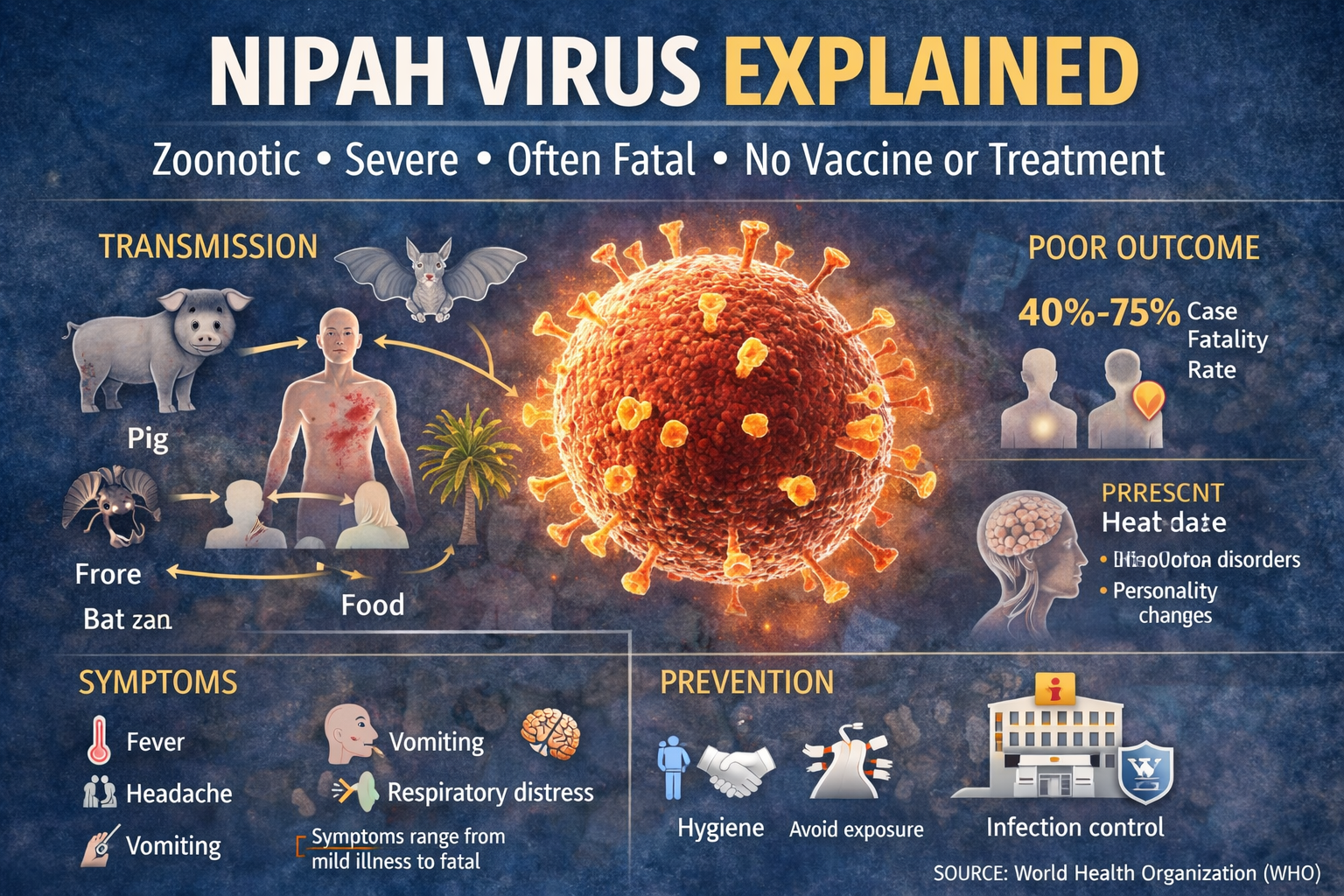
Nipah virus (NiV) is a zoonotic virus that can be transmitted from animals to humans and also spread directly between people. It belongs to the Henipavirus genus and causes illness ranging from asymptomatic infection to severe respiratory disease and fatal encephalitis. Nipah virus can also infect animals, where it spreads efficiently and causes significant economic losses.
Although only a limited number of outbreaks have been documented, primarily in South and Southeast Asia, the virus infects a wide range of animal species. It has a high case fatality rate, making it a serious public health concern.
Natural Reservoir and Animal Hosts
The natural hosts of Nipah virus are fruit bats of the family Pteropodidae, species in the Pteropus genus. These bats carry the virus without showing signs of illness.
Evidence of Nipah or related henipaviruses has been found in bat populations across Asia, Africa, and the Pacific. In Africa, fruit bats of the Eidolon genus have tested positive for antibodies against Nipah and Hendra viruses, suggesting possible viral circulation.
Domestic animals can also be infected. Pigs played a central role in the first recorded outbreak and are highly susceptible to infection. Other animals reported to be infected include horses, goats, sheep, cats, and dogs.
Causes and Modes of Transmission
Nipah virus spreads through direct or indirect contact with infected animals, contaminated food, or infected people.
Animal-to-Human Transmission
- During the 1999 outbreak in Malaysia, most human infections occurred through direct contact with infected pigs or their tissues.
- Transmission occurred via exposure to respiratory secretions, urine, or tissues of sick animals.
Foodborne Transmission
- In outbreaks in Bangladesh and India, infection was linked to the consumption of raw date palm sap or fruits contaminated with saliva or urine from infected fruit bats.
- Fruits partially eaten by bats or exposed to bat secretions pose a risk.
Human-to-Human Transmission
- Documented in several outbreaks, particularly among family members, caregivers, and health workers.
- In Bangladesh, approximately 50% of reported cases between 2001 and 2008 were linked to person-to-person transmission.
- In Siliguri, India (2001), 75% of cases occurred among hospital staff or visitors, indicating healthcare-associated transmission.
Transmission occurs through close contact with bodily fluids, including respiratory secretions, blood, urine, and other excretions.
Nipah Virus in South Asia: History
Airport Health Screenings Rise Amid Nipah Virus Cases in India
Incubation Period
- Typically 4–14 days
- Incubation periods of up to 45 days have been reported
Signs and Symptoms
Nipah virus infection presents with a wide clinical spectrum.
Early Symptoms
- Fever
- Headache
- Muscle pain (myalgia)
- Vomiting
- Sore throat
Progressive Symptoms
- Dizziness
- Drowsiness
- Altered consciousness
- Neurological signs indicating acute encephalitis
Severe Disease
- Seizures
- Atypical pneumonia
- Severe respiratory illness
- Acute respiratory distress syndrome (ARDS)
- Coma within 24–48 hours in severe cases
Diagnosis
Early diagnosis is challenging since initial symptoms are non-specific. Therefore, it can hinder accurate diagnosis and create challenges in outbreak detection and effective outbreak response activities. Accuracy depends on the timing, quality, and handling of samples
Diagnosis is based on clinical history and exposure assessment, and laboratory confirmation using:
- Real-time polymerase chain reaction (RT-PCR) from bodily fluids
- ELISA for antibody detection
- PCR assays
- Virus isolation in cell culture (specialized laboratories)
Treatment
There are currently no licensed antiviral drugs or vaccines for Nipah virus infection. However, intensive supportive care is recommended, focusing on:
- Management of respiratory failure
- Neurological care for encephalitis and seizures
- Intensive supportive care in severe cases
Nipah virus is listed as a priority disease under the WHO Research and Development Blueprint, highlighting the urgent need for vaccines and therapeutics.
Ethiopia Ends First-Ever Marburg Virus Disease Outbreak
WHO’s Updated Guidelines on HIV Management
Prevention and Control
Currently, there are no vaccines available against Nipah virus.
In Animals
- Based on the experience gained during the outbreak of Nipah involving pig farms in 1999, routine and thorough cleaning and disinfection of pig farms with appropriate detergents may be effective in preventing infection.
- If an outbreak is suspected, the animal premises should be quarantined immediately.
- Culling of infected animals, with close supervision of burial or incineration of carcasses, may be necessary to reduce the risk of transmission to people.
- Restricting or banning the movement of animals from infected farms to other areas can reduce the spread of the disease.
- As Nipah virus outbreaks have involved pigs and/or fruit bats, establishing an animal health/wildlife surveillance system, using a One Health approach, to detect Nipah cases is essential in providing early warning for veterinary and human public health authorities.
In Humans
- Prevention of transmission should first focus on decreasing bat access to date palm sap and other fresh food products.
- Freshly collected date palm juice should be boiled, and fruits should be thoroughly washed and peeled before consumption.
- Keeping bats away from sap collection sites with protective coverings may be helpful.
- Discard fruits showing signs of bat bites.
- Use protective equipment when handling sick animals or their tissues, and during slaughtering and culling procedures.
- In endemic areas, when establishing new pig farms, considerations should be given to presence of fruit bats in the area and in general, pig feed and pig shed should be protected against bats when feasible.
- Avoid close unprotected physical contact with Nipah virus-infected people.
- Conduct regular hand washing after caring for or visiting sick people.
- Maintain strict infection prevention and control measures in healthcare settings.
Health-Care Settings
- Health-care workers caring for patients with suspected or confirmed infection, or handling specimens from them, should implement standard infection control precautions at all times
- Contact and droplet precautions should be used in addition to standard precautions.
- Apply airborne precautions where required.
- Samples taken from people and animals with suspected Nipah virus infection should be handled by trained staff working in suitably equipped laboratories.
WHO recommends a One Health approach, integrating human, animal, and environmental surveillance.
About the Author





2 thoughts on “What Is Nipah Virus?”