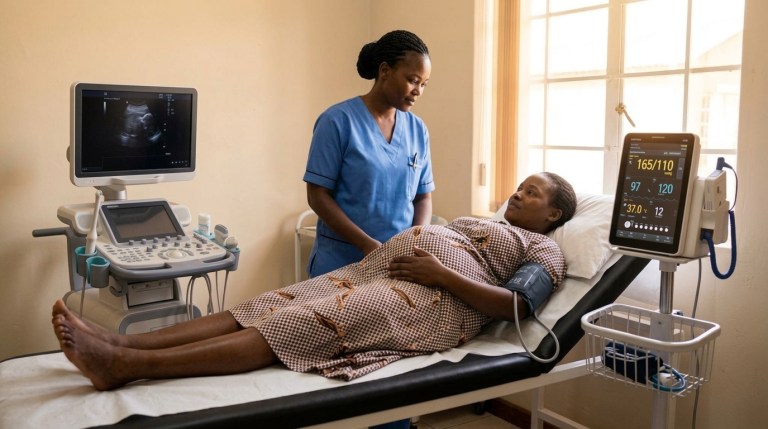
A nurse checks a pregnant woman's blood pressure during an antenatal visit and gets high readings. High blood pressure can be an early sign of preeclampsia. Image generated with AI (Nano Banana).
Preeclampsia is one of the hypertensive disorders of pregnancy characterized by high blood pressure and often damage to the kidneys or liver. Worldwide, preeclampsia affects 3-8% of women who give birth. Hypertensive disorders of pregnancy, including preeclampsia, cause around 16% of maternal deaths globally. The burden of preeclampsia in Africa is especially heavy. In 2023, Sub-Saharan Africa accounted for 70% of global maternal deaths, with preeclampsia and other related hypertensive disorders among the leading causes.
It usually starts after the 20th week of pregnancy and in some cases, it develops during labour and even after the baby is delivered, sometimes as late as six weeks postpartum. Here is what is known about the causes of preeclampsia, who is at risk, and when to get help.
Causes of Preeclampsia
The exact cause of preeclampsia is not completely understood, but research points to the abnormal development of the placenta early in pregnancy. Normally, cells from the placenta invade the mother’s arteries in the womb, creating a connection and allowing more blood to flow to the placenta. In preeclampsia, this process happens incompletely, leaving the placenta poorly supplied with blood.
This is believed to trigger the release of harmful proteins into the mother’s bloodstream, which damage the lining of her blood vessels. This damage leads to a rise in blood pressure, causes protein to leak into the urine, and strains the mother’s organs. Also, the poor blood supply to the placenta limits the amount of nutrients reaching the developing fetus, slowing the baby’s growth.
Who Is at Risk of Developing Preeclampsia?
According to ACOG (2021), several factors increase a woman’s risk of developing preeclampsia. Having one or more of these is a good indicator that closer monitoring is required.
Women are at a higher risk if they;
- Had preeclampsia or eclampsia in a past pregnancy
- Have existing chronic hypertension
- Have kidney disease or autoimmune conditions such as Lupus
- Are carrying more than one baby
- Have diabetes mellitus
- Are under 18 years
Women are at moderate risk if they;
- Have a family history of preeclampsia
- Are experiencing their first pregnancy
- Are pregnant more than 10 years after their last pregnancy
- Have increased BMI
- Have had previous pregnancy complication(s)
- Are 35 years or older
Symptoms of Preeclampsia
Preeclampsia does not always feel like anything unusual at first, which is part of why it goes unnoticed. Common signs include:
- Persistent high blood pressure
- Protein in the urine (usually found through a urine test, not something a woman would notice herself)
- Blurred vision or seeing spots
- Severe headaches that don’t ease with rest or regular painkillers
- Pain in the upper abdomen
- Nausea and vomiting that starts after the 2nd trimester
- Swelling in the face, hands or feet
- Shortness of breath
If left untreated, preeclampsia can progress to eclampsia, which includes all the symptoms of preeclampsia plus convulsions. It is a life-threatening emergency for both mother and baby.
Self Care Tips for Pregnancy and Postpartum Wellness
When to see a doctor
If any of these symptoms appear suddenly, go to the nearest hospital right away. Convulsions are a medical emergency requiring immediate care.
Even without these signs, keeping every antenatal appointment is important. Doctors often detect preeclampsia through routine blood pressure checks, regular examinations, and urine tests before a woman feels anything is wrong. Early detection and care are an effective response to preeclampsia in Africa and everywhere else it occurs.

Causes of Maternal Mortality in Africa
Treatment of Preeclampsia
The options available depend on how far along the pregnancy is and how severe the condition has become. The care team’s main goals are to prevent seizures, protect your organs, and support your baby for as long as it’s safe.
- Magnesium sulfate: This is administered to prevent convulsions, especially in severe preeclampsia. It significantly reduces the risk of developing eclampsia.
- Antihypertensive medications: These are given to keep the blood pressure under control.
- Corticosteroids: If early delivery looks likely, this is given to help the baby’s lungs mature faster and increase the odds of survival.
- Close monitoring: The care team monitors both mother and baby throughout the pregnancy, tracking blood pressure and the baby’s growth, and performing necessary blood tests to assess organ function.
- Delivery: The care team tries to prolong your pregnancy for as long as it’s safe for both mother and baby. But because the placenta is implicated in the condition, delivery remains a major means of resolving it. If preeclampsia threatens either life, early delivery becomes necessary, sometimes through induced labor or by cesarean section.
Why Maternal Mortality Remains High in Africa
Complications of Preeclampsia
For the mother:
- Eclampsia– severe preeclampsia can lead to eclampsia, which is characterized by convulsions. This is a medical emergency and can be fatal without urgent treatment.
- HELLP Syndrome- a severe complication involving breakdown of red blood cells, elevated liver enzymes, and a low platelet count. It affects the liver and the blood’s ability to clot properly.
- Organ Damage- preeclampsia most commonly affects the kidneys and liver, but severe cases also strain the heart and lungs. Persistent high blood pressure also increases the risk of bleeding in the brain.
- Placental abruption- the placenta can separate from the uterine wall before delivery, causing hemorrhage, which endangers both mother and baby.
- Long-term risk- women who have had preeclampsia carry a higher lifetime risk of high blood pressure, heart disease, and stroke even years after delivery.
For the baby:
- Fetal growth Restriction– a poorly functioning placenta can limit how much oxygen and nutrients reach the baby, slowing growth.
- Preterm Birth- This often happens because early delivery becomes necessary to protect the mother and baby. Babies born early or growth-restricted often need extra medical support after birth.
- Stillbirth- In severe or poorly managed cases, preeclampsia can end a pregnancy in stillbirth.
Comprehensive Guide to Self Care and Safe Family Planning
Key Takeaway
Preeclampsia is dangerous mainly because it can develop with no obvious warning, and by the time symptoms are noticed, the condition may already be harder to manage. This is why awareness of preeclampsia in Africa is important.
Keeping every antenatal appointment is important and necessary. Early detection through routine checks and tests, knowing the risk factors, recognizing the warning signs, and acting quickly when something feels wrong can be the difference between a manageable pregnancy and a life-threatening one.
Why Do Women Stay Silent About Vaginal Itching?
Frequently Asked Questions (FAQs)
What are the early signs of preeclampsia?
High blood pressure and protein found in the urine are usually the earliest signs. They are often found during routine antenatal checks before a woman notices any symptoms herself.
Can pre-eclampsia happen after delivery?
Yes. It can develop during labor and up to six weeks after birth, even in women who had no signs of it during pregnancy. That’s why close monitoring is very important during labor and the puerperal period (the first six weeks after birth).
How can a woman reduce her risk of preeclampsia?
Reducing the risk of preeclampsia in Africa and everywhere else starts with attending every antenatal appointment. WHO recommends low-dose aspirin and calcium supplementation for some women. A healthcare provider will advise on whether this applies.
What are other hypertensive disorders in pregnancy?
Apart from preeclampsia and eclampsia, others include chronic hypertension (high blood pressure that existed before pregnancy), gestational hypertension (high blood pressure that develops in pregnancy without protein in the urine), and chronic hypertension with superimposed preeclampsia (when a woman with existing high blood pressure then develops preeclampsia).
Can a baby survive preeclampsia?
Yes, especially with early detection and proper care. Many babies born to mothers with preeclampsia are healthy. However, early delivery sometimes requires additional care for the baby.
Sources
- WHO, Pre-eclampsia fact sheet: Available here
- ACOG, Preeclampsia and Pregnancy infographic: Available here
- WHO 2025 maternal mortality estimates: Available here
- Kutllovci Hasani et al., Understanding Preeclampsia: Cardiovascular Pathophysiology, Histopathological Insights and Molecular Biomarkers (2025), Medical Sciences: Available here
- WHO, Adolescent pregnancy fact sheet: Available here
About the Author