Lassa fever surveillance involves the identification, reporting, and investigation of suspected cases, laboratory confirmation, contact tracing, and analysis of epidemiological information. These activities help public health authorities detect outbreaks, monitor disease patterns, and guide appropriate control measures (World Health Organization, 1999).
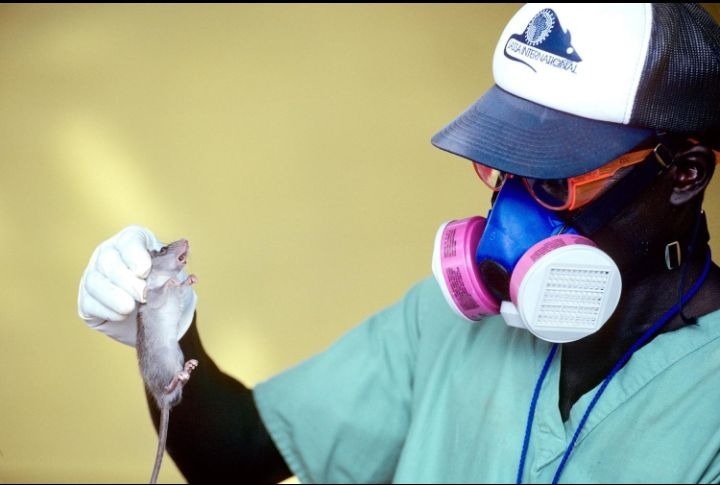
Lassa fever is endemic in several West African countries, including Nigeria, Sierra Leone, Liberia, and Guinea. Its geographical distribution is linked to the presence of infected Mastomys rodents, which serve as the natural reservoir of the virus. The widespread distribution of these rodents also places neighboring countries at potential risk (WHO, 2024; Centers for Disease Control and Prevention, 2025).
The case was first documented in 1969 in northern Nigeria and was named after the town of Lassa, where it was identified. It has remained an important public health concern in Nigeria and other affected West African countries (WHO, 2024; CDC, 2025).
Read: Lassa Fever In Nigeria
Stages of Lassa Fever Surveillance
In Nigeria, there are various stages of Lassa fever surveillance, which include the following:
COMMUNITY / PATIENT
↓
HEALTH FACILITY
↓
CASE NOTIFICATION
↓
SURVEILLANCE TEAM
↓
LABORATORY TESTING
↓
CASE INVESTIGATION
↓
CONTACT TRACING
↓
PUBLIC HEALTH ACTION
Figure 1. Main stages of Lassa fever surveillance and response.
Case Detection and Notification
Lassa fever surveillance begins when a suspected case is identified in a community or healthcare facility. Clinical recognition can be difficult because its early symptoms may resemble those of malaria, typhoid fever, and other infections (WHO, 2024).
Suspected cases are assessed using established clinical and epidemiological criteria. Relevant information may include symptoms, illness onset, and a history of exposure to rodents or contact with a probable or confirmed case. The NCDC’s National Guidelines for Lassa Fever Case Management describe criteria used to identify suspected cases (NCDC, 2018).
When a case is suspected, national procedures guide notification, investigation, and specimen collection. The surveillance team uses the reports to support further investigation and response (World Health Organization, 2024).
Laboratory Confirmation
Laboratory testing is essential for confirming Lassa fever because its symptoms overlap with those of other febrile illnesses. Clinical assessment can raise suspicion of infection, but laboratory investigations are required to establish the diagnosis (World Health Organization, 2024).
Reverse transcription polymerase chain reaction (RT-PCR) is a molecular test that detects Lassa virus genetic material in patient samples and is used to confirm infection. Other diagnostic methods include antibody enzyme-linked immunosorbent assays (ELISA), antigen detection tests, and virus isolation by cell culture. WHO classifies these as standard laboratory methods for diagnosing Lassa fever.
Timely laboratory confirmation helps healthcare teams distinguish between confirmed cases and suspected cases and supports appropriate clinical management and public health response. Laboratory results also contribute to surveillance data used to monitor disease occurrence and guide control activities (WHO, 2023).
Contact Tracing

This is a public health activity that helps to identify and follow up people who may have been exposed to an infectious disease. During a Lassa fever response, public health teams investigate the exposure history of suspected or confirmed cases to identify individuals who may require assessment and monitoring (WHO, 2016).
After identifying contacts, the surveillance team assesses their exposure and provides instructions on symptom monitoring and what to do if they become ill. WHO guidance describes following exposed contacts for 21 days after their last exposure. Anyone who develops symptoms should promptly seek medical assessment according to relevant public health procedures (WHO, 2016).
Active case finding complements contact tracing by proactively searching for additional suspected cases in affected communities and healthcare facilities. This may involve reviewing healthcare records, investigating reports of illness, and conducting community enquiries where appropriate. WHO has documented the use of enhanced active case finding and contact tracing as part of Lassa fever outbreak responses in Nigeria (WHO, 2020).
Analysis of Lassa Fever Surveillance Data
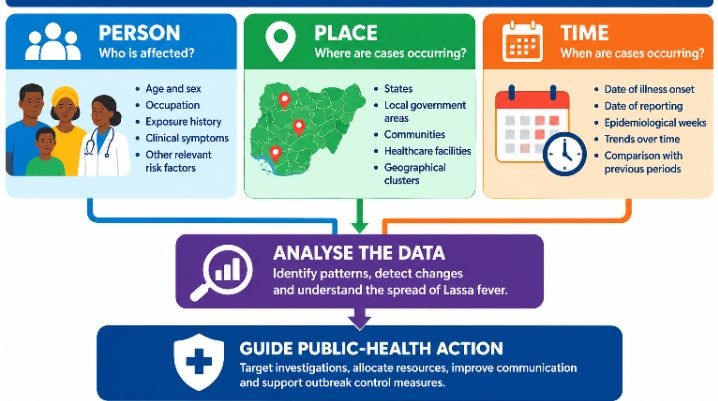
Figure 2. Person, place, and time analysis of Lassa fever surveillance data.
The World Health Organization reports on Lassa fever in Nigeria illustrate how authorities use case counts, geographical distribution, and trends over time to assess outbreaks and guide public-health responses (WHO, 2022; WHO, 2023).
Surveillance data must be interpreted carefully. Changes in reported cases may reflect changes in disease occurrence, testing availability, reporting practices, or the ability to detect infections. Therefore, case counts should be considered alongside laboratory findings, epidemiological investigations, and information about surveillance system performance.
Surveillance Challenges for Lassa Fever
Delayed detection and reporting: Early Lassa fever symptoms can resemble those of other illnesses, making clinical recognition difficult. Delays in seeking care or recognizing suspected cases may affect how quickly patients are investigated and reported (World Health Organization, 2024).
Limited access to laboratory diagnosis: Laboratory testing is essential for confirming suspected infections. Limited access to appropriate diagnostic services, specimen transport difficulties, and delays in obtaining results can complicate timely case confirmation and surveillance activities. WHO identifies laboratory capacity as an important component of Lassa fever preparedness and response (WHO, 2023).
Infection prevention and control: Healthcare workers may be exposed to infection when suspected cases are not recognized promptly, or appropriate infection prevention and control measures are not consistently followed. WHO recommends appropriate precautions when caring for suspected or confirmed cases (WHO, 2024).
Read Also: Breakdown of Africa’s Ebola Response Budget of US$517.7 Million
Community Awareness and Engagement
Community members play an important role in recognizing illness, seeking medical attention, and following public health advice. Community engagement can help improve awareness of Lassa fever transmission, encourage early presentation at healthcare facilities, and promote practices that reduce exposure to infected rodents and contaminated materials (WHO, 2024).
Improving surveillance systems
Public health authorities can strengthen surveillance by improving healthcare workers’ training, supporting timely reporting, expanding access to diagnostic services, and working with trusted community leaders to communicate prevention messages. These measures should be adapted to local conditions and supported by relevant public health guidance (WHO, 2023).
Using Surveillance Information to Guide Public Health Response
Surveillance information helps public health authorities determine where response activities are needed and which interventions should be prioritised. For Lassa fever in Nigeria, reported cases, laboratory results, and epidemiological investigations contribute to decisions about case management, contact tracing, laboratory capacity, and community engagement (World Health Organization, 2023).
Prioritizing affected areas: Analyzing the geographical distribution of confirmed cases helps authorities identify states and local government areas requiring further investigation or additional response support. This information can guide the deployment of public health personnel and the distribution of diagnostic and infection prevention supplies (WHO, 2023).
Strengthening case investigation and contact tracing: Information collected from suspected and confirmed cases helps surveillance teams investigate possible sources of exposure and identify people who may have been exposed. These investigations support follow-up activities and help authorities assess potential transmission (WHO, 2020).
Improving infection prevention and control: Surveillance findings, including reports of infections among healthcare workers, can highlight the need to strengthen infection prevention and control practices. Appropriate hand hygiene, personal protective equipment, and safe patient care procedures are important measures for reducing exposure in healthcare settings (Nigeria Centre for Disease Control and Prevention [NCDC], 2018).
Read Also: Why Chronic Illnesses Are Rising in Africa
Guiding Public Health Communication
Information about transmission routes and affected communities can help authorities provide prevention messages. Communication may address safe food storage, reducing rodent access to homes, early healthcare-seeking, and the importance of reporting suspected cases (NCDC, 2025).
Surveillance findings should be reviewed alongside laboratory results, field investigations, and information about the completeness of reporting. An increase in reported cases does not necessarily indicate that transmission has increased by the same amount; changes in testing and case detection can also affect reported totals. The CDC explains that surveillance data may be affected by incomplete reporting and changes in case detection, while WHO’s Integrated Disease Surveillance and Response guidance recommends analyzing and interpreting data to inform public health action.
While endemic in Nigeria, cases are much higher than in previous epidemic seasons. This could be attributed to reduced response capacity in surveillance and laboratory testing. It is necessary to continue to monitor the annual peaks of Lassa fever in order to contextualize incidence and inform the effective management of Lassa fever (WHO, 2022).
Read Also: Organ Donation in Africa: Why Does the Gap Still Exist?
Conclusion
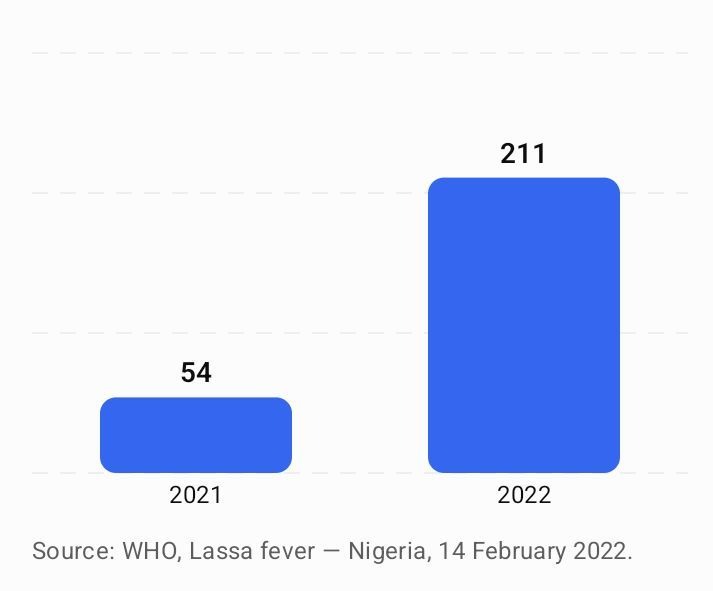
Figure 3. Confirmed Lassa fever cases reported in Nigeria during epidemiological weeks 1–4 of 2021 and 2022.
Surveillance is essential to controlling Lassa fever in Nigeria. It enables health authorities to detect suspected cases early, monitor disease trends, identify affected communities, and coordinate timely public health responses. The importance of these activities is reflected in Nigeria’s experience: in 2022, WHO reported confirmed cases and deaths across eight states during epidemiological weeks 1–4 of 2021, compared with substantially greater geographical spread during the corresponding period in 2022. WHO also highlighted how weaknesses in surveillance and laboratory testing can affect the interpretation of reported case numbers.
The NCDC has likewise emphasized the need for stronger surveillance, contact tracing, active case finding, and coordinated emergency response. In March 2026, it identified gaps in contact tracing and active case search in some local government areas, which also include delayed presentation and inconsistent implementation of response measures. These are the reasons why surveillance must extend beyond counting confirmed cases to investigating possible exposures, identifying transmission patterns, and ensuring that findings lead to action.
The Federal Ministry of Health and Social Welfare, working with NCDC, WHO, and other partners, supports national preparedness and response efforts. WHO reported in June 2026 that these partners were strengthening early detection, surveillance, health-information management, and community engagement.
References
Centers for Disease Control and Prevention. (2025, January 31). About Lassa fever. CDC: About Lassa Fever.
Centers for Disease Control and Prevention. (n.d.). Principles of epidemiology in public health practice: Lesson 5, Section 5—Analyzing and interpreting data.
https://archive.cdc.gov/www_cdc_gov/csels/dsepd/ss1978/lesson5/section5.html
Nigeria Centre for Disease Control and Prevention. (2025). Public advisory on Lassa fever.
Nigeria Centre for Disease Control. (2018). National guidelines for Lassa fever case management.
https://ncdc.gov.ng/themes/common/docs/protocols/92_1547068532.pdf
WHO — Lassa fever fact sheet.
World Health Organization. (2024, December 5). Lassa fever.
https://www.who.int/news-room/fact-sheets/detail/lassa-fever
World Health Organization. (2023, May 1). Lassa fever – Nigeria.
https://www.who.int/emergencies/disease-outbreak-news/item/2023-DON463
World Health Organization. (2022, February 14). Lassa fever – Nigeria. WHO outbreak report.
World Health Organization. (2020, February 20). Lassa fever – Nigeria.
https://www.who.int/emergencies/disease-outbreak-news/item/2020-DON245
World Health Organization Regional Office for Africa. (2019). Technical guidelines for integrated disease surveillance and response in the African Region (3rd ed.).
World Health Organization. (1999). WHO recommended surveillance standards (2nd ed.). Department of Communicable Disease Surveillance and Response.
Click to access who-recommended-surveillance-standards.pdf
About the Author