Pip: Welcome to The Health Pulse — where health and voices pulse together!
Mara: Today we’re covering pregnancy blood pressure risks, the menstrual hygiene gaps facing adolescent girls in Nigeria, and why so many women stay silent about vaginal itching for far too long.
Pip: Three subjects that have one thing in common: the consequences of not talking about them are serious.
Mara: Let’s start with the dangers of high blood pressure in pregnancy.
Preeclampsia: A Silent Danger in Pregnancy
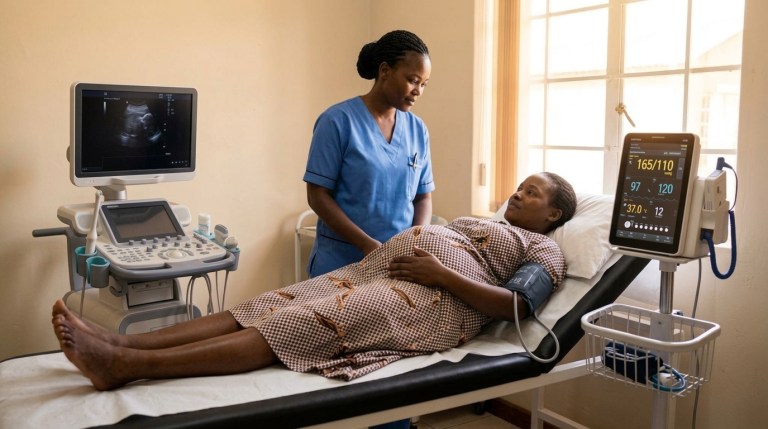
Mara: Preeclampsia sits in a difficult category — a condition that can develop without obvious warning, and that carries life-threatening consequences for both mother and baby, particularly across sub-Saharan Africa.
Pip: Onyinyechi Kalu puts the scale plainly: “In 2023, Sub-Saharan Africa accounted for 70% of global maternal deaths, with preeclampsia and other related hypertensive disorders among the leading causes.”
Mara: And the condition’s biology makes early detection especially hard — placental development goes wrong early, but symptoms may not surface until well into the second half of pregnancy, or even after delivery.
Pip: Which is why Kalu’s core message is attendance: every antenatal appointment is a chance to catch what a woman cannot feel herself. That same logic carries directly into what girls need long before pregnancy begins.
Menstrual Hygiene, Schooling, and Dignity in Lagos
Mara: The question Ijeoma Blessing puts on the table is this: what does it actually cost a girl to have no safe, private, informed way to manage her period at school?
Pip: The answer is measurable. Blessing writes that “menstrual hygiene refers to the practices and conditions that enable women and adolescent girls to manage their menstruation safely, hygienically, and with dignity” — and then documents, systematically, where that standard is not being met.
Mara: The numbers are stark. Approximately 37% of girls in Nigeria lack access to adequate menstrual hygiene materials. Over 40% in Lagos use improvised materials such as cloth or tissue. And only around 30 to 50% of Nigerian schools have adequate WASH facilities to support menstrual hygiene.
Pip: The infrastructure failure and the knowledge failure reinforce each other — girls arrive at menarche unprepared because schools don’t teach it, and then can’t manage safely because schools don’t have the facilities.
Mara: Blessing’s proposed solutions are deliberately multi-sectoral: curriculum reform, government subsidies on menstrual products, WASH infrastructure investment, and community campaigns to challenge the taboos that keep menstruation a source of shame rather than a routine health matter.
Pip: The stigma piece matters. When menstruation is treated as something to hide, girls hide their struggles with it too — and that silence has a cost in school attendance, in health outcomes, in self-worth.
Mara: Which is a pattern that extends well beyond adolescence.
Breaking the Silence on Vaginal Itching
Pip: The silence around vaginal itching is the subject the post by Precious Adebisi takes on directly — not just what causes it, but why so many women endure it without seeking care.
Mara: The post frames it this way: “Much of this silence is rooted in shame and fear of judgment. Many women see genital symptoms as more embarrassing to discuss than other health issues.”
Pip: And that embarrassment has real clinical consequences — women self-treating with unverified remedies, conditions worsening, and simple treatable causes like yeast infections or bacterial vaginosis going unaddressed far longer than necessary.
Mara: The post is clear that talking about it — to a clinician, to someone trusted — is where treatment actually begins.
Pip: Preeclampsia, menstrual hygiene, vaginal health — different conditions, same underlying theme: information withheld, or never given, makes everything harder to manage.
Mara: More on The Health Pulse next time. Visit our website http://www.thehealthpulse.org and stay informed.
Pip: And remember to subsribe to our channel, share and like our content.
Mara and Pip: This is where health and voices pulse together, Byeeee!
About the Author