Image credit: World Health Organization/PAHO
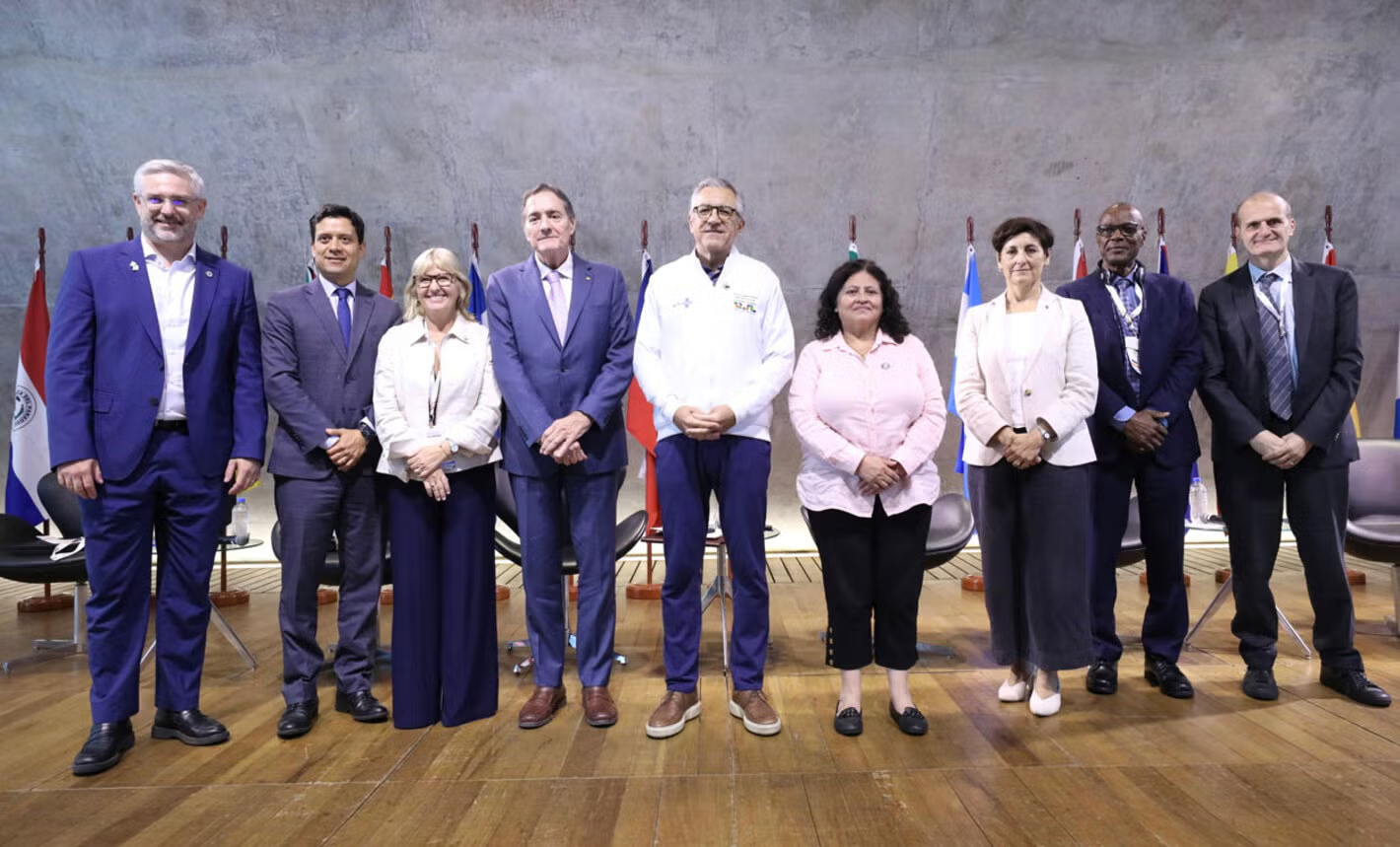
Rio de Janeiro, 28 January 2026 — The Alliance for Primary Health Care (PHC) in the Americas marked its second anniversary this week. It formally welcomed Bolivia and Uruguay as new members. This occurred during the Second Regional Forum held in Rio de Janeiro from 26–28 January.
The Alliance, led jointly by the Pan American Health Organisation (PAHO), the World Bank, and the Inter-American Development Bank (IDB), has driven health system transformation. This transformation occurs across the region. They have achieved this by aligning technical cooperation, policy dialogue, and financing. Since its launch in December 2023, the initiative has mobilized more than US$1 billion in investments. This funding strengthens primary health care in five member countries. These countries are Chile, the Dominican Republic, El Salvador, Panama, and Paraguay.
Bolivia and Uruguay launched their national coordination platforms to bring together ministries of health and finance. They also include development partners and banks. Their aim is to accelerate primary health care reforms. Brazil also reaffirmed its support, signing a letter of intent to strengthen collaboration on PHC-based health system transformation.
“We welcome the political commitment of the countries that have joined this Alliance. It is urgent to involve, not only ministers of Health, but also ministers of Finance, Education, and Labor to ensure high-quality services,” emphasized Jaime Saavedra, Director of Human Development for Latin America and the Caribbean at the World Bank. He underscored that “it is crucial to invest in the health workforce, its training, selection, career paths, and incentives—and to integrate public health systems, social insurance, and others to provide effective, patient-centered services. These are complex but urgent political decisions.”
Three Months After Hurricane Melissa: Caribbean Health Systems Recovery
PAHO Director Dr. Jarbas Barbosa said the Alliance has proven its capacity to align cooperation and financing around national priorities. World Bank and IDB officials emphasised the importance of investing in health workers. They also stressed the need for integrated services and resilient systems.
The Alliance continues to position primary health care as the most equitable strategy. It is also seen as the most cost-effective strategy for advancing universal health coverage. This approach addresses demographic, epidemiological, and climate-related challenges across the Americas.
About the Author