Tuberculosis is one of those diseases that progresses through stages of severity. Mycobacterium tuberculosis is the culprit that affects the lungs. And, if left untreated, it can spread to other parts of the body, such as the spine, brain, or kidneys.
One of the characteristics of Tuberculosis is that it is contagious, and in that, it breeds the discussion: Can people living in crowded spaces, low-income households, and communities live free of the pangs of tuberculosis?
Is it a discussion yet in this locality, let alone a discussion of an end?
In 2023, rural areas accounted for approximately 53% of prevalent Tuberculosis cases, which totaled 7.3 million people.
According to the WHO, eight countries account for about two-thirds of global TB cases: India, Indonesia, the Philippines, China, Pakistan, Nigeria, the Democratic Republic of the Congo, and Bangladesh.
This clearly shows and paints the picture of…
The world Tuberculosis lives in and why
In 2024, Nigeria, the country with the highest Tuberculosis burden in Africa and the sixth-highest globally, reported 510,000 TB cases.
The numbers have increased steadily over the years, with cases ranging from 269,000 to 467,000 between 2000 and 2021.
A report from KNCV shows that 16 Nigerians die each hour due to TB, equivalent to about 347 deaths daily, resulting in 10,417 deaths monthly.
The number of deaths above is nothing compared to the devastating losses from India, recognized as the capital of tuberculosis. The country records 2.8 million new tuberculosis cases annually, of which more than 100,000 are multidrug resistant (MDR).
Also, Indonesia contributes 10% to the global burden of tuberculosis, resulting in roughly 1 million newly reported cases. China, Pakistan, the Democratic Republic of the Congo, and Bangladesh provide similar reports, although their numbers differ.
You might think that number is all these countries have in common. In fact, the data reveal only the common aggravated causative factor that these countries share.
Research Gate reports that adverse socio-demographic factors drive the growing burden of tuberculosis. Poor knowledge gap, overcrowded households, rural residency, unemployment, and bad health choices are the culprits behind the number of deaths.
How Socio-demographic Factors Remain a Problematic Cause for TB Burden
Neglect of the potency of these factors has somewhat diminished the practical approach in policy-making. A structure and framework that works for the United States and Australia would definitely fall short when implemented in a third-world country.
This is evident in the interplay between growing poverty, undernutrition, overcrowding, and knowledge gaps. As a result, the number of deaths and mutant cases keeps increasing.
Is Tuberculosis More of a Family Problem Than We Realize? Lived experiences Will Tell
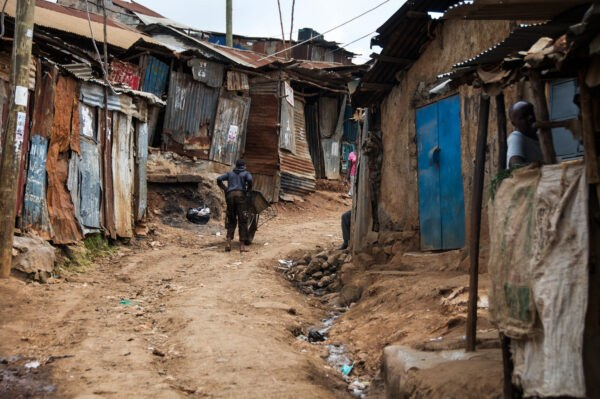
An individual diagnosed with TB who only knows that he needs to cover his nose while he sneezes and lives in a single room that houses a family of 6 might be TB-free in 6 months, but the aftermath for most cases is that the children or neighbors become latent carriers of TB, and in weeks after exposure, the cycle continues with once-free TB individuals.
In another home, it is a situation of late diagnosis, while diseases spread across clusters of homes until it becomes a matter of urgency.
And when it does, the primary healthcare centers either lack the expertise in detecting TB, leading to referrals to hospitals for a scheduled appointment, while their immune system keeps deteriorating.
“I came because of this cough,” Ibrahim, a herdsman and lifelong resident of the community, said. For more than two weeks, he has had a persistent cough and has been treating himself with herbs, which have yielded no positive results. “I hope they will be able to heal me here today, especially as it will be free,” he said.
This was the response from an attendee at the 2025 World Tuberculosis Day at SaukaVillage, Nigeria. A clear display of ignorance and a vicious cycle of poverty that has continues to exacerbate the impact of the Tuberculosis
In a situation like this, access to quality diagnosis and swift medical attention is already at the expense of an already-inflicted immune system, and that is, if proximity and self-medication do not stand in the way.
In this concept, “early detection,” a cornerstone of global TB strategy, becomes more aspirational.
It is arguably that the knowledge gap plays a significant. However, it is nothing compared to the vicious cycle of poverty, resulting in self-medication and poor completion of dosage.
The consequence is not only worsening disease severity but also the emergence of drug-resistant strains, which are significantly harder and more expensive to treat.
Now, this brings us to the crux of our discussion:
Is TB Free 2030 Realistic in Rural Settings?
The commemoration of the 2025 World Tuberculosis Day in Nigeria was heavy with advocates and patients’ voices whose concerns have shifted from strategies to questioning the reality of TB-free 2030.
This led an unnamed health worker to dismiss the N1 billion donation as inadequate, stating that the major problem is the eradication of poverty, as drugs without building proper immunity will not make the illness go away.
While knowledge gaps still linger, emphasis has moved beyond the distribution of money to strong community participation, early detection, sustained investment, and free services, as we celebrate 2026 World Tuberculosis Day by consulting local chemists and patent stores for data about the history of TB patients on the 2026 World Tuberculosis Day.
An analysis of the End TB strategy proposed by WHO serves as a holistic approach that would definitely reduce the rate and spread of this disease.
Its pillars include:
- Integrated, patient-centered TB care and prevention
- Bold policies and supportive systems
- Intensified research and innovation
The plausible framework assumes a level of system readiness that is often absent in a rural context. In high-contributing TB countries, where flawed systemic practices are the norm, bold policies would be another chequebook.
This also applies to the integration of early patient-centred TB care; this approach has helped to curtail the situation.
However, it has been compromised by a persistent cycle of poverty that keeps individuals from purchasing an appropriate meal and fruit during the duration of this treatment, let alone the cost of the drugs.
In addition, the poor education of village doctors, who serve as the first point of contact for sick patients, also defeats the cornerstone of the global TB strategy.
Reports from a local community in China, Shigtase, Tibet, revealed that sick patients preferred traditional doctors (Tibetan doctors) over well-informed ones due to known methods, such as fusion or promised quick recovery.
In some cases, the village doctors lack the appropriate knowledge needed to identify the disguising symptoms of tuberculosis, particularly at the earliest stage.
Conclusion
If the goal of ending Tuberculosis by 2030 is to move beyond rhetoric, policy responses must shift from generalized frameworks to context-specific, equity-driven interventions.
A shift in perspective that sees tuberculosis as a reflection of inequality, not entirely a disease. Until that inequality is addressed boldly in policymaking, significant reductions remain aspirational.
Each country is extensively flawed in one or more of the root causes of the prevalence of TB. A plus to the strategy will be mapping out the significant ones, or a few that could have a ripple effect on others.
Prioritizing the peculiarities in China, Nigeria, or India, rather than a policy that serves as a one-size-fits-all solution. This way, policy can be rooted in addressing a single cause at multiple angles.
For example, a few peculiarities in India include a cycle of poverty, leading to under-nutrition, overcrowding, and a poor health care gap.
Adjusting policy to prioritize funding of businesses, healthcare needs, NGOs, and job creation that can help alleviate poverty, as well as reducing the knowledge gap.
In southern Africa, mining is an important risk factor for unskilled workers. To address these challenges, health ministries could collaborate with multiple sectors to ensure that the necessary regulations and equipment are maintained and to improve the quality of life for these workers.
To provide a straightforward answer to the question. A TB-free 2030 is realistic even in rural communities if the root cause that has enabled it to flourish is addressed, and policies are revised to address the unique peculiarities in each country.
What are your thoughts about TB-free 2030? Is it a reality to look forward to or should it continue to bear roots uncrystallized in the imaginative world?
About the Author