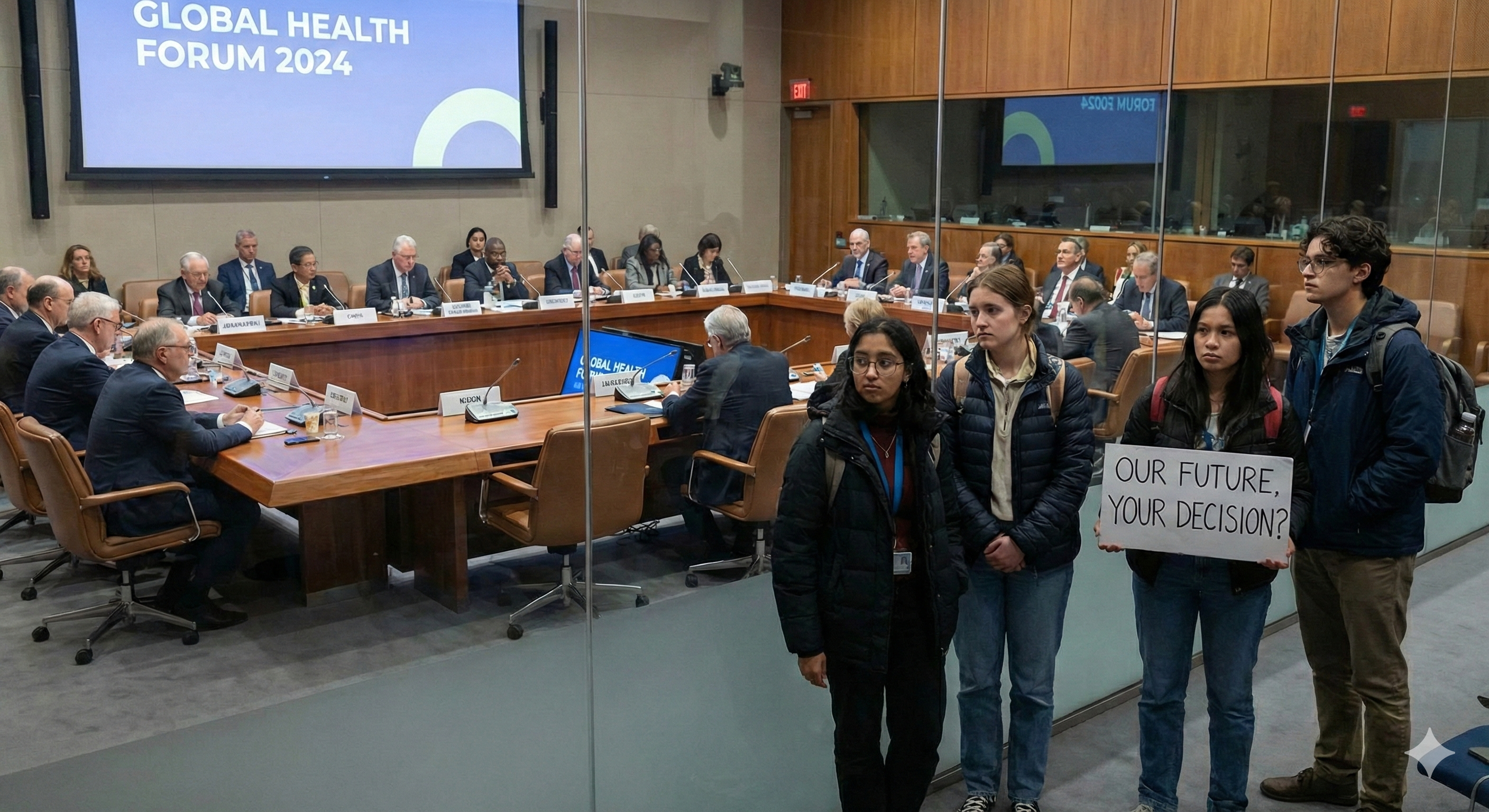
Have you ever been invited to join a conversation and, soon into the chat, realized you were given a seat to make the number, not necessarily because your opinions or suggestions were considered valuable? Do not get me wrong, you were given an audience, but that is where it ended. Heard and nothing else, just heard.
For a second, picture the round table event or the forum with professors, bagged with qualifications that might take you the next 10 years to achieve. In this gathering, the narrative above holds.
This leads to the elephant in the room: If youth are given acknowledged seats in the health forum and crucial matters that affect both the young and old, and to a greater extent, the youth. Why are youth still at the lowest rung of the ladder when it comes to making decisions that affect them most?
The answer to this question, you might think, is as simple as a “yes” or a “no”. It is shaped by deeply entrenched systems, outdated beliefs about who deserves power, and structural barriers that keep young people on the margins of conversations that will define their futures.
What Data Reveals About Youth Exclusion In Health Decision
Young people aged 10-24 make up approximately 1.8 billion of the global population, nearly a quarter of the world’s population, according to UN.ORG. Yet when we look at who is actually making health decisions that matter to them, the picture shifts dramatically.
During the COVID-19 pandemic, a crisis that severely impacted young people’s education, mental health, and economic prospects, UNICEF found that only 28% of the 74 countries surveyed involved young people in national pandemic response planning.
This shows that youth are everywhere but not actively involved at the decision-making table. And Here is Why:
Age Is Still Treated as a Proxy for Expertise In Making Health Decisions
The assumption is that credentials and years in the system equal understanding. But the reality is often lived experience. It is a pervasive belief, the kind that further deepens inadequate policy in global health circles, that youth lack the expertise and experience because they have not yet had the privilege of time.
The statement “experience is the best teacher”, and by this, I mean lived experience, the type that can be seen through the lens of youth and energetic spirit, not entirely textbook experience.
To further drive the point home. Walk through the life of this 24-year-old lady who has spent the last five years organising peer mental health support networks in your community.
She has seen firsthand what works and what doesn’t. She understands the barriers young people face when accessing services: the stigma, the cost, and the disconnect between what professionals offer and what youth actually need. But when she walks into that policy room, she faces a 55-year-old consultant who has never navigated the mental health system as a young person but has a PhD and 30 years of experience in “the field”.
Who do you think gets listened to? I will leave that for you to decide
The reality is that a young person living with HIV knows more about being a young person living with HIV than any researcher who has only studied it from the outside. A teenage girl navigating reproductive health services understands the barriers in ways no survey can capture.
Power Is Concentrated in Established Health Institutions
PMNCH reports that while many global health organisations claim to engage young people, meaningful participation, defined as shared decision-making authority over strategy and resources, remains inconsequential.
This is largely because global health decision-making is dominated by governments, donors, multilateral agencies, and senior experts, leading to typically advisory rather than authoritative, with no formal voting power or budget control.
Tokenism Replaces Meaningful Youth Participation
The opening scenario, being in the room but not really, paints the picture of the word “tokenism”, and it is rampant in global health. In most cases, youth are included to satisfy visibility, equity, or donor requirements rather than to share power. What this implies is technical involvement, but not in any meaningful way.
Youth Are Seen as “Future Leaders”, Not Present Ones
You must have heard the above narrative that frames youth as leaders in training, rather than legitimate decision-makers now. This postpones inclusion and ignores the fact that many global health challenges disproportionately affect young people today.
While the narrative is true, it still doesn’t neglect the approach to inclusive power ownership. Youth might not have attained industry-relevant certifications, but the shared experiences and perspectives that have shaped them have a significant impact on how they pass the appropriate policy to people. And this can be more effective when the voices of youth from diverse cultural backgrounds and ages are heard.
The Structural Barriers
Due to the already established entry and qualifications that demand decades of mainly textbook experience. We all see and say “youth voices matter”, but the rigid system tunes down the tones where it matters.
The modality surrounding youth limits participation, and the financially demanding registration, flights, and accommodation shut the door to more effective engagement, which would have been provided had the system had robust youth representation, funding, and schedules that enforce growth and participation.
Adultism and Risk Aversion
Youth are energetic, curious, idealistic, and driven to achieve independence. However, institutional leaders often allow the fear of being perceived as “too radical, or “impractical”. As a result, youth are included only when their views align with institutional comfort, not when they demand structural change
The Real-World Impact of Youth Exclusion
It affects every aspect of youth health; sometimes the consequences are tangible and often devastating.
- Increased Mental Health Disorder
- Barriers to safe and well-informed sexual and reproductive health programs
- Increased risky and health behaviour and substance abuse
- Higher morbidity and mortality
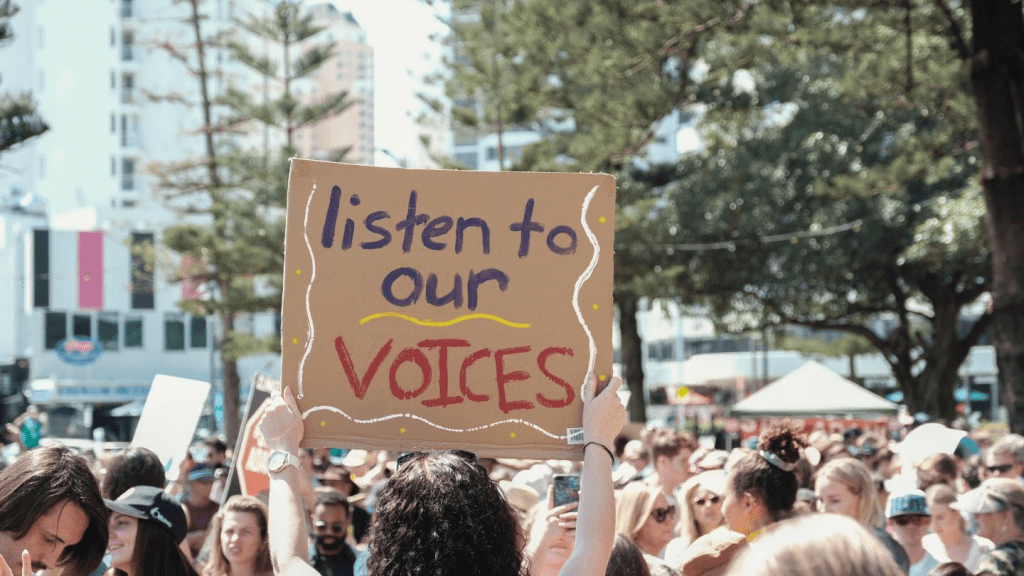
It will be considered wishful thinking when only the subject “Why” is discussed without an actionable step on the way forward.
How can youth own the voices of the seat they occupy? How can youth from different cultural backgrounds effectively represent their folk in where and what matters?
The way forward
1. Power-Sharing:
Policymakers and organizations need to look beyond age limitations and credentials and advisory roles to actual decision-making positions. This implies:
- Youth representatives on governing boards with voting rights
- Co-creation of policies from the beginning, not just consultation at the end
- Budget authority for youth-led initiatives
- Accountability mechanisms that track whether youth input actually shapes outcomes
2. Paying for Participation
While volunteering is essential for developing or enriching youth’s experience, it also helps assess the motivation at the right time. Organizing bodies need to realize that youth have needs. Youth in rural communities, who share in the burden of economic barriers, find that unpaid volunteering programs feel more like a burden.
Meaningful youth engagement requires:
- Stipends and honorariums for youth advisors and representatives
- Travel and accommodation funding for conferences and meetings
- Paid fellowships and internships, not unpaid “opportunities.”
- Capacity-building budgets that don’t come out of young people’s pockets.
3. Investing in Youth-Led Solutions
With over 1.8 billion youth, nearly a quarter of the world, it is impossible to fit a quarter of the population into existing organizational structures. On a second note, a massive impact can be achieved across diverse communities in a short period of time by funding thousands of youth-led NGOs, foundations, and health tech startups.
According to research from Restless Development, youth-led organizations are often more effective at reaching and engaging young people, yet they receive a tiny fraction of development funding compared to traditional NGOs.
The shift demands:
- Multi-year, flexible funding for youth-led organizations
- Simplified application processes that don’t require decades of organizational history
- Trust-based grantmaking that recognizes youth-led groups may operate differently from traditional institutions
- Technical support and mentorship without co-opting youth leadership
4. Centering the Most Marginalized
Not all youth have equal access to decision-making spaces. This is not due to disinterest but to the effects of different time zones and locations. True inclusion means:
- Intentional outreach to young people facing multiple forms of marginalization
- Inclusive openings and support to youth faced with disability, language, geography, gender identity, race, and socioeconomic status
- Creating multiple pathways for engagement beyond formal institutional channels
- Recognizing intersectionality in how exclusion operates
A Closing Thought
The right questions we need to answer are: Can we afford not to include youth in the decision-making process?
Should the basic democratic principle that people largely affected by decisions have a meaningful say in making decisions be denied?
If you have read to this point, you are convinced the answer is in the negative. Every health policy, every allocation, and every program design related to youth health are ultimately decisions about young people’s bodies, minds, futures, and lives.
To make this decision without significant youth involvement is ineffective and short-sighted.
It is time for a change, and it begins before policies are drafted and budgets for funding are allocated across sectors.
What is your experience with being included, or excluded, from decisions that affect you? Have you ever been the token youth voice in the room? Let’s hear your story.
About the Author