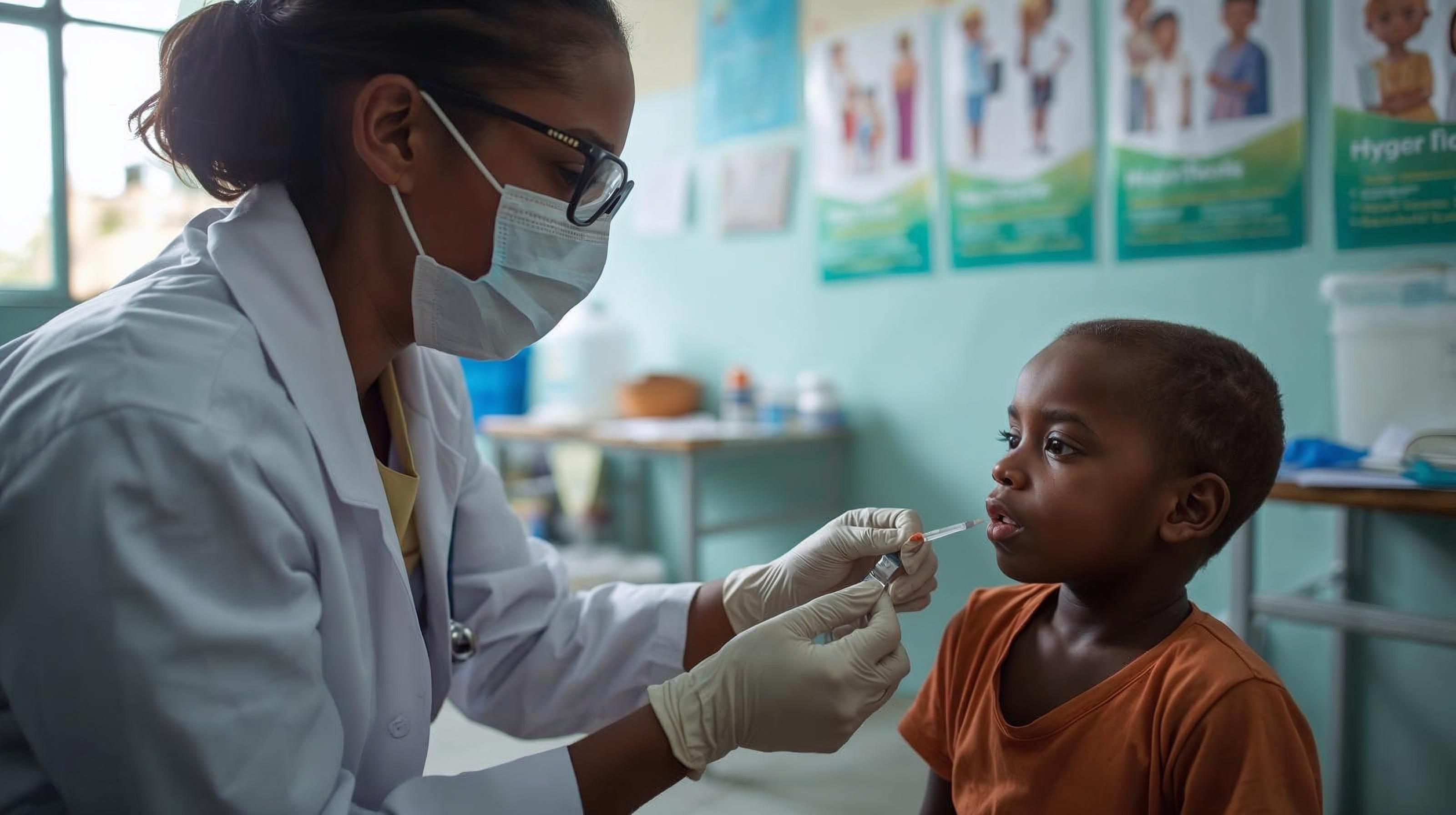
Geneva | 4 February 2026 — Preventive cholera vaccination campaigns have officially resumed since 2022. This marks the first resumption in more than three years, following a significant increase in the global supply of oral cholera vaccines (OCVs). The news was jointly announced by Gavi, the Vaccine Alliance, UNICEF, and the World Health Organisation (WHO).
The campaigns were suspended in 2022 due to severe global vaccine shortages caused by an unprecedented rise in cholera outbreaks.
Mozambique is the first country to restart preventive cholera vaccination. This campaign in Mozambique comes amid an ongoing cholera outbreak resulting from devastating floods that affected more than 700,000 people. These floods damaged water and sanitation infrastructure, further increasing vulnerability to waterborne diseases. Additional preventive campaigns are planned in Bangladesh and the Democratic Republic of the Congo (DRC). Both countries continue to face high cholera transmission risks.
Read Also The Hidden Cholera Crisis In Africa
Expanded vaccine supply enables prevention
Currently, 20 million oral cholera vaccine doses have been allocated for preventive use. Of these, 3.6 million doses have been delivered to Mozambique, 6.1 million to the DRC, and 10.3 million doses are planned for Bangladesh. The vaccines are financed by Gavi and procured and delivered by UNICEF.
Global annual OCV supply has doubled from 35 million doses in 2022 to almost 70 million doses in 2025. This increase follows sustained efforts to expand manufacturing capacity. It also results from improved coordination among global health partners. However, EUBiologics remains the only manufacturer currently producing cholera vaccines at the scale required for mass vaccination campaigns.
“Global vaccine shortages forced us into a reactionary cycle. We had to respond to cholera outbreaks rather than preventing them,” said Dr Tedros Adhanom Ghebreyesus, WHO Director-General. “We are now in a stronger position to break that cycle. These vaccines will save lives.”
Read Also Gavi, the Vaccine Alliance Replenishment Summit Marks A New Era for Global Vaccination
Private Sector’s Role in Gavi’s Vision for Global Health Equity
Targeted and equitable allocation
The three countries were chosen based on allocation criteria developed by the Global Task Force for Cholera Control (GTFCC). These criteria ensure that limited vaccine supplies are distributed equitably and target areas where the public health impact is greatest. Thus, preventive vaccination is expected to help protect high-risk communities and reduce the scale of future outbreaks.
Oral cholera vaccines are safe and effective for individuals aged one year and older. One dose provides short-term protection for at least six months, while two doses offer protection for up to three years. While preventive campaigns can now resume, a one-dose strategy will remain standard for outbreak responses until supplies further stabilize.
The Cholera Surge
Cholera continues to be a major global health threat and remains severe in settings affected by conflict, poverty, and inadequate access to safe water and sanitation. In 2025 alone, more than 600,000 cases of cholera or acute watery diarrhoea and an estimated 7,600 deaths were reported to the WHO across 33 countries. These figures are believed to be significant underestimates since cholera is one of the underreported diseases.
Even though a decline in cases was observed in 2025, cholera-related deaths have continued to rise since 2021. This indicates the need for sustained prevention, early treatment, and long-term investments in water, sanitation, and hygiene infrastructure.
Read Also WHO Launches US$1 Billion Appeal for Global Health Crises
During the announcement of the vaccination resumption, global health leaders emphasised that vaccination alone is not sufficient. Therefore, preventive cholera vaccination must be accompanied by improvements in disease surveillance. Additionally, rapid response systems and community engagement are crucial. Also, resilient health and water systems are needed to achieve lasting control and eventual elimination of the disease.
About the Author