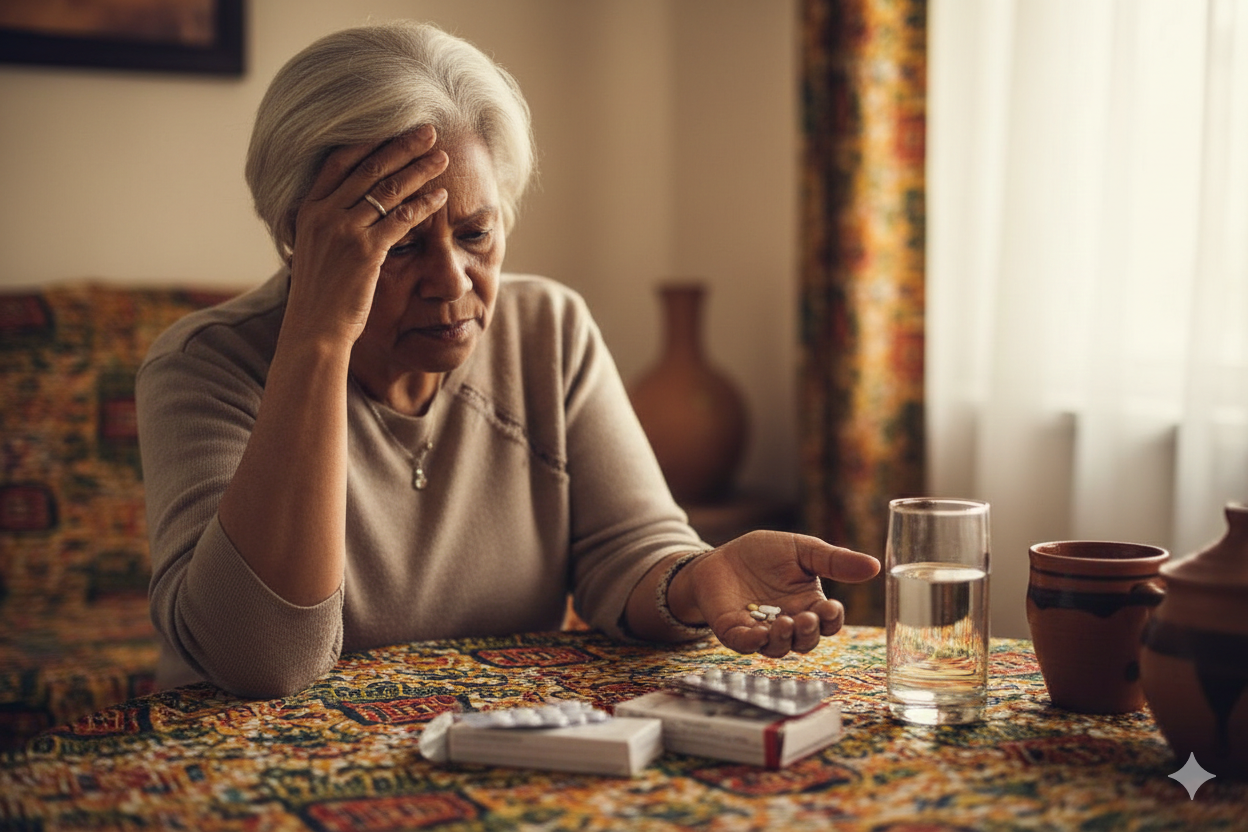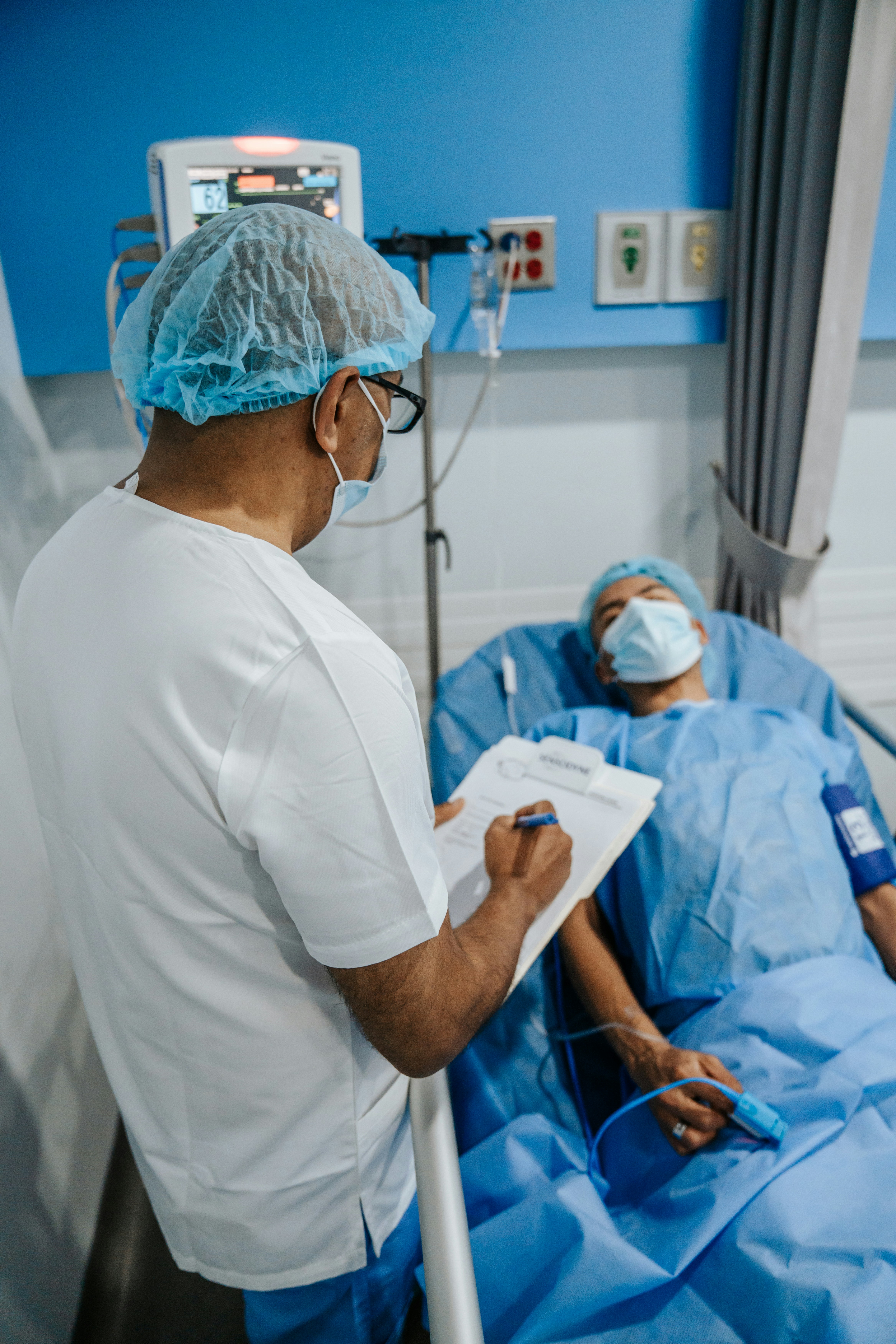
Every year, millions of people are diagnosed with cancer globally. According to the International Agency for Research on Cancer (IARC), approximately 20 million new cases were recorded in 2022, and about 9.7 million deaths. Globally, cancer cases are projected to rise to 35 million by 2050. This is a 77% increase from the recorded cases in 2022, with the fastest rise in lower-income countries, including those in Africa.
Africa recorded over 1.1 million new cancer cases and more than 750,000 deaths in 2022 alone. This works out to about 65 deaths for every 100 people diagnosed with cancer. Sharma et al.(2022) found that Africa’s overall cancer rate sits at 132 cases per 100,000 people, the lowest of any continent. However, the death rate is about 88.8 per 100,000, almost identical to that of the other continents.
Treatment for cancer often begins too late. Reports have shown that many patients are diagnosed only after the disease has advanced, leading to poor treatment outcomes and low survival rates.
Although cancer incidence in Africa remains lower than in many other regions, the continent experiences disproportionately high mortality. This article explores why late diagnosis remains a defining challenge across the continent and how strengthening screening, awareness, and health systems could improve survival rates.
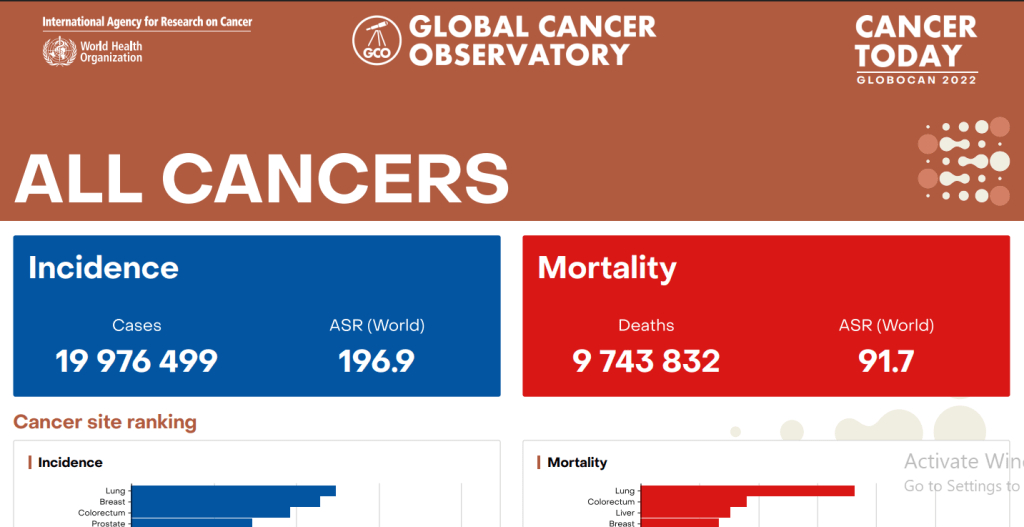
Screenshot from Global Cancer Observatory fact sheet 2022 (WHO)
What is Cancer?
According to the World Health Organization (WHO), cancer is an umbrella term for a large family of related conditions. They all share one core mechanism: normal cells transforming into abnormal ones that grow past the body’s usual limits.
This transformation usually happens in stages, moving from a precancerous lesion to a fully malignant tumor. It is shaped by interactions between a person’s genetics and external exposures to carcinogens such as radiation, tobacco smoke, and certain infections. If left unaddressed, these abnormal cells invade nearby tissues and spread to distant organs through a process called metastasis.
However, the extent of the process by the time a patient is diagnosed is what doctors call the clinical stage. It determines everything that follows, including the urgency of care and the treatment options available.
Read also Why Adherence to HIV Medications Gets Harder With Age
Why Do Many Cancers Present Late?
Unavailability of screening infrastructure
A mapping study of cancer in Africa by Sharma et al.(2022) found that mammography for breast cancer screening was available at the public primary healthcare level in only 15 African countries. Pap smear testing for cervical cancer screening existed in just a third of countries.
Even basic, low-cost screening methods reach only about half the continent. As a result, most cancers go undetected until symptoms of advanced disease appear.
Process from diagnosis to proper care
A South African cohort study by Mapanga et al. (2023) tracked breast cancer diagnoses across hospital settings. Women treated at a rural-serving hospital were nearly three times more likely to be diagnosed at a late stage than those at an urban-serving hospital. The difference was due to the different paths they take to get answers.
Women who went from primary clinics to secondary hospitals before reaching a specialist had a 32-66% higher chance of a late-stage diagnosis.
When there are inadequate systems and information in place for newly diagnosed cases, they have a higher chance of presenting late.
That same study found that women who waited more than three months between first noticing a symptom and actually getting into the health system were 66% more likely to be diagnosed late.
Across Sub-Saharan Africa, delays of more than three months between symptom and care-seeking can affect up to 70% of patients, compared to less than 17% in the US and Europe.
Availability of professionals
Africa has the lowest physician density of any world region. With just 2.7 doctors per 100,000 people, compared to 32.1 per 100000 in Europe, this shortage contributes to the delay between a patient’s first contact with the health system and confirmed diagnosis, ultimately prolonging treatment.
A multicountry cohort study by Foerster et al. tracked 1,429 women with breast cancer across select sub-Saharan countries and found that the diagnostic journey ranged from 2.4 to 11.3 months. In most settings, 58% to 79% of the delay occurred after the woman had already been introduced to the health system, driven by factors like limited access to specialists and diagnostic facilities and prolonged follow-up visits.
How Timing Affects Cancer Survival Rates in Africa
A 2020 study from IARC and the African Cancer Registry Network followed cervical cancer patients across 11 sub-Saharan African countries. It found that patients from areas with medium and low Human Development Index (HDI) were at least four times as likely to die as those from high-HDI areas. This difference tracked almost entirely with how developed the health systems around the patient were.
Among patients diagnosed at an early stage (Stage I-II), the 5-year survival rate was 67.5% in high-HDI areas and about 42.2% in low-HDI areas. The difference is influenced by the events around the diagnosis: how fast it was caught and what kind of care was available once it was.
This pattern is found repeatedly across nearly every cancer type in Africa. A tumor doesn’t grow faster because a patient lives in a low-resource country, but because it has more time to advance before it is caught, and appropriate measures are taken.
Cancer within Africa and Cross-Regional Variations
Mauritius and The Gambia
A continent-wide mapping study using cancer registry data found Mauritius posts one of the best cancer survival outcomes on the continent, while The Gambia posts one of the worst. Researchers tie this directly to differences in health systems and the Human Development Index between the two countries.
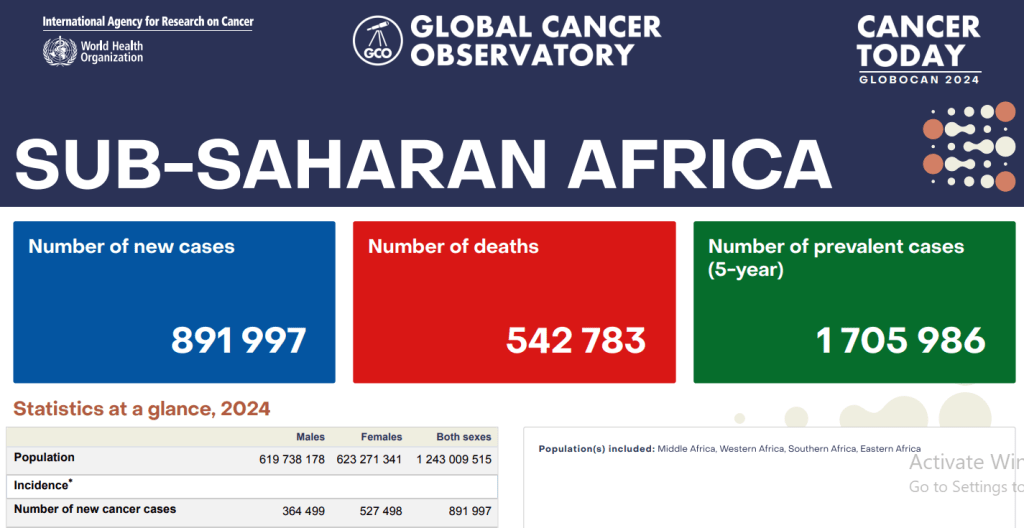
Screenshot from Global Cancer Observatory fact sheet 2024 (WHO)
The IARC’s Global Cancer Observatory (2022) shows just how concentrated the burden is in Sub-Saharan Africa. For instance: breast, cervical, and prostate cancer alone account for nearly 40% of all new cancer cases in the region.
For women, it’s even more concentrated. Breast and cervical cancer together make up about half of all new female cancer cases. Cervical cancer causes more deaths in the region than any other single cancer, despite ranking second in new cases. This is because the disease is often detected late.
In 2022, Africa accounts for just 5.9% of the world’s new cancer cases, but 7.8% of the world’s cancer deaths. While North America accounts for 13.4% of global cases, but only 7.2% of global deaths.
How Cancer burdens vary across Africa
Different parts of Africa carry the cancer burden very differently, and the cancers driving most of the continent’s numbers include:
Breast cancer: A 2025 meta-analysis pooling data from 22 African countries found 5-year survival was highest in Northern Africa at 64%, and lowest in Western Africa at 32%.
Cervical cancer: East Africa’s pooled 5-year survival rate sits at just 36%, against 54.9% in South Africa. A major teaching hospital in Ghana recorded a 32.4% five-year survival rate, and researchers noted the mortality rate of cervical cancer in West Africa runs more than three times the global average.
Prostate cancer: Prostate cancer is now the second most common cancer among men globally, with an estimated incidence of 30 cases per 100,000 people in Africa. These rates run notably higher in North African countries like Morocco and Tunisia, and in South Africa. Limited access to PSA testing and biopsies, especially in rural areas, means the disease is often caught at an advanced stage, driving up mortality, according to WHO.
Liver cancer: West African countries report the highest liver cancer incidence and death rates on the continent, linked to higher rates of chronic Hepatitis B infection, while East African countries generally see a noticeably lower burden. Another study reports that across Sub-Saharan Africa, roughly 95 out of every 100 people diagnosed with liver cancer eventually die from it.
Colorectal cancer: GLOBOCAN 2022 data show the highest colorectal cancer rates are in North Africa, followed by East Africa. West and Central Africa currently record the lowest rates on the continent, but lowest doesn’t mean safe: cases across Africa are projected to more than double by 2050, from roughly 70,000 to nearly 169,000 a year.
Policies and Interventions for Cancer in Africa
Some efforts are already in place to reduce this burden. In 2020, WHO launched its Global Strategy to Accelerate the Elimination of Cervical Cancer, setting three major targets for 2030. The goals are for 90% of girls to be fully vaccinated against HPV by age 15, 70% of women screened with a high-performance test by age 35 (and again at 45), and 90% of women with cervical disease receiving treatment.
The burden falls heavily on Africa. 19 of the 20 most affected countries globally are on the continent. If those targets are met, cervical cancer could become one of the first cancers eliminated as a public health threat in Africa.
Beyond cervical cancer, the bigger structural tool is the National Cancer Control Plan (NCCP). This is a country-level roadmap covering prevention, early detection, treatment, and palliative care. Today, roughly two-thirds of African countries have an NCCP in place, up from just 46% in 2013 real progress, but still leaving a third of the continent without one.
A separate analysis found that only 11 African countries currently have a fully active, up-to-date plan. But having a plan on paper and having one funded and running aren’t the same thing.
The pattern across all of this is consistent: where there’s a clear target and sustained funding, like the cervical cancer elimination push, progress is measurable. Where there’s a plan but no resourcing behind it, the gap between policy and practice stays wide open.
Conclusion
Closing Africa’s cancer survival gap is achievable if early detection becomes as much of a priority as treatment itself. That means investing in screening infrastructure and training health workers to catch warning signs sooner. It also means making diagnostic tests affordable enough that cost stops being the reason someone waits.
What do you think needs to happen first: better screening access, public awareness, or stronger health policies?
Sources
- GLOBOCAN — All Cancers Fact Sheet Available here
- IARC — New Report on Global Cancer Burden in 2022 by World Region and HDI. Available here
- ASCO — JCO Global Oncology study. Available here
- Sharma R, Aashima, Nanda M, Fronterre C, Sewagudde P, Ssentongo AE, Yenney K, Arhin ND, Oh J, Amponsah-Manu F and Ssentongo P (2022) Mapping Cancer in Africa: A Comprehensive and Comparable Characterization of 34 Cancer Types Using Estimates From GLOBOCAN 2020. Front. Public Health 10:839835. doi: 10.3389/fpubh.2022.839835. Available here
- Mapanga W, Norris SA, Craig A, Ayeni OA, Chen WC, Jacobson JS, Neugut AI, Ruff P, Cubasch H, O’Neil DS, Buccimazza I, Čačala S, Stopforth LW, Farrow HA, Nietz S, Phakathi B, Chirwa T, McCormack VA, Joffe M. Drivers of disparities in stage at diagnosis among women with breast cancer: South African breast cancers and HIV outcomes cohort. PLoS One. 2023 Feb 16;18(2):e0281916. doi: 10.1371/journal.pone.0281916. PMID: 36795733; PMCID: PMC9934316. Available here
- Sharma R, Aashima, Nanda M, Fronterre C, Sewagudde P, Ssentongo AE, Yenney K, Arhin ND, Oh J, Amponsah-Manu F, Ssentongo P. Mapping Cancer in Africa: A Comprehensive and Comparable Characterization of 34 Cancer Types Using Estimates From GLOBOCAN 2020. Front Public Health. 2022 Apr 25;10:839835. doi: 10.3389/fpubh.2022.839835. PMID: 35548083; PMCID: PMC9082420. Available here
- PMC — Foerster et al. diagnostic journey study Foerster M, McKenzie F, Zietsman A, Galukande M, Anele A, Adisa C, Parham G, Pinder L, Schüz J, McCormack V, Dos-Santos-Silva I. Dissecting the journey to breast cancer diagnosis in sub-Saharan Africa: Findings from the multicountry ABC-DO cohort study. Int J Cancer. 2021 Jan 15;148(2):340-351. doi: 10.1002/ijc.33209. Epub 2020 Aug 4. PMID: 32663320; PMCID: PMC7754476. Available here
- IARC — Cervical Cancer Survival in Sub-Saharan Africa by Age, Stage, and HDI. Available here
- GLOBOCAN — Sub-Saharan Africa Fact Sheet. Available here
- medRxiv — 2025 breast cancer meta-analysis. Available here
- Taylor & Francis — cervical cancer survival study. Available here
- ecancer — Ghana teaching hospital cervical cancer survival. Available here
- WHO AFRO — Understanding Africa’s Prostate Cancer Prevalence. Available here
- Amponsah-Dacosta E. Hepatitis B virus infection and hepatocellular carcinoma in sub-Saharan Africa: Implications for elimination of viral hepatitis by 2030? World J Gastroenterol. 2021 Sep 28;27(36):6025-6038. doi: 10.3748/wjg.v27.i36.6025. PMID: 34629817; PMCID: PMC8476331. Available here
- El-Kassas M, Elbadry M. Hepatocellular Carcinoma in Africa: Challenges and Opportunities. Front Med (Lausanne). 2022 Jun 24;9:899420. doi: 10.3389/fmed.2022.899420. PMID: 35814750; PMCID: PMC9263092. Available here
- ecancer — African Colorectal Cancer Burden in 2022 and Projections to 2050. Available here
- WHO AFRO — Advancing Cervical Cancer Elimination Agenda in the African Region. Available here
- UICC — Addressing Cancer Burden in Africa. Available here
- Duncan K, Cira MK, Barango P, Trimble EL. Challenges and opportunities in the creation and implementation of cancer-control plans in Africa. Ecancermedicalscience. 2019 Jul 25;13:938. doi: 10.3332/ecancer.2019.938. PMID: 31552111; PMCID: PMC6722107. Available here
- WHO — Cancer. Available here
- WHO AFRO — Africa Advances Goal of Cervical Cancer Elimination. Available here
About the Author