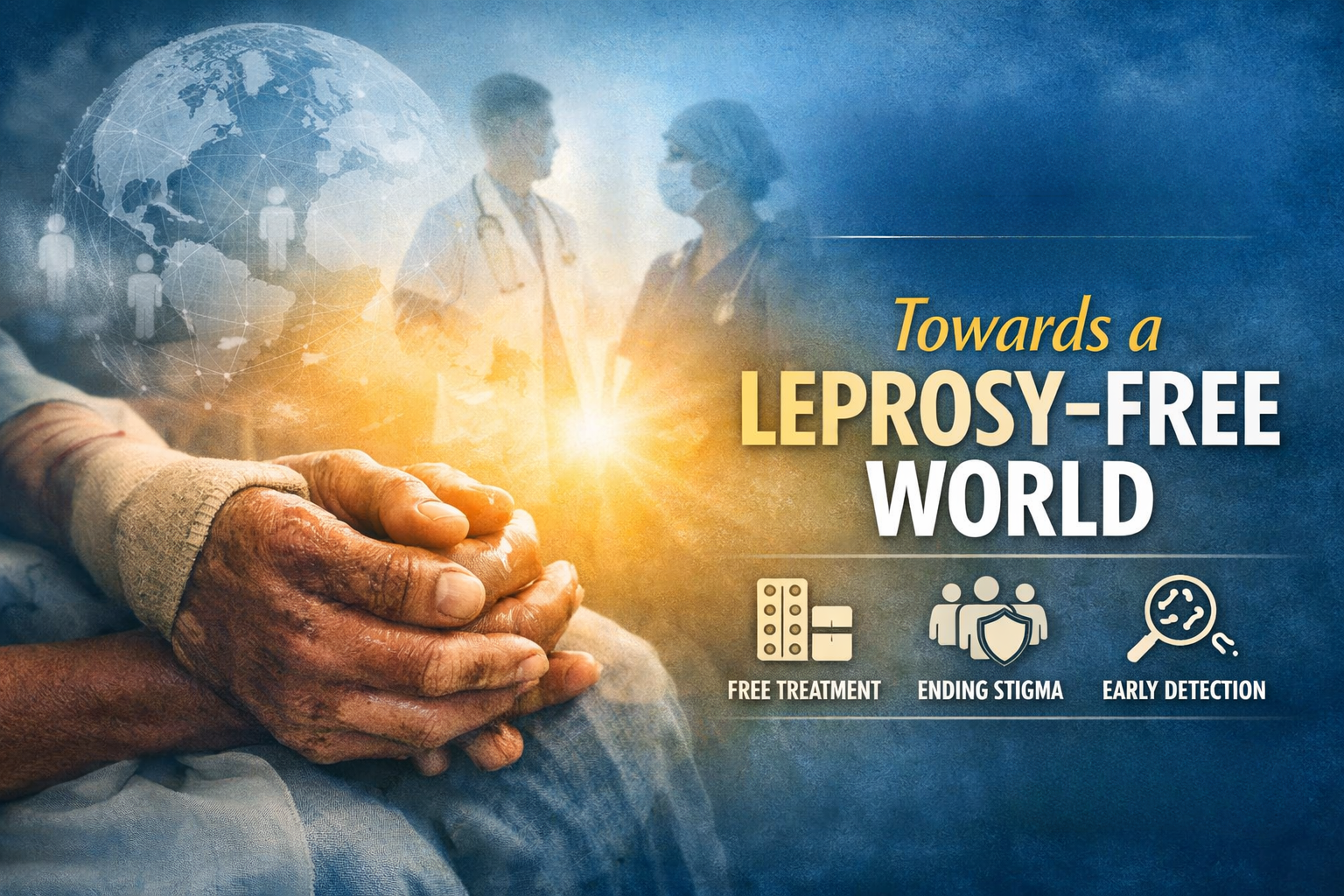
The World Health Organization (WHO) yesterday renewed its commitment to a leprosy-free world. It emphasised sustained partnerships, access to treatment, and stigma reduction. These efforts come ahead of World Leprosy Day, to be observed on 25 January 2026.
Leprosy, an infectious disease caused by Mycobacterium leprae, primarily affects the skin and peripheral nerves. While curable, untreated leprosy can lead to progressive and permanent disabilities, often compounded by social stigma and discrimination. WHO maintains that universal access to timely treatment is essential. It remains central to global efforts to interrupt transmission and eliminate the disease.
Global Progress, Persistent Burden
Global efforts to eliminate leprosy have contributed to a steady decline in new cases across many regions. In 2024, data submitted to the WHO from 188 countries, areas, and territories showed that 55 reported zero leprosy cases. This reflects progress toward elimination. However, leprosy continues to affect tens of thousands of people worldwide. WHO reported that 172,717 new leprosy cases were detected globally in 2024. This stresses the need for sustained surveillance, early diagnosis, and treatment.
A 25-Year Partnership Supporting Free Treatment
The global leprosy response has a long-standing partnership between WHO and Novartis. This partnership has supported the free provision of Multidrug Therapy (MDT) to all leprosy patients worldwide since 2000. MDT is the standard treatment for leprosy. It is highly effective in curing the disease and preventing disability when administered early.
Marking 25 years of collaboration, WHO and Novartis have extended their Memorandum of Understanding (MoU) for an additional five years (2026–2030). Under the renewed agreement, Novartis will continue supplying MDT and clofazimine free of charge. They will also support the procurement and distribution of single-dose rifampicin (SDR). This is for post-exposure prophylaxis (PEP), a preventive intervention for contacts of people diagnosed with leprosy.
“This enduring collaboration exemplifies the power of global solidarity in health,” said Dr Jeremy Farrar, WHO Assistant Director-General for Health Promotion, Disease Prevention and Care. “Ensuring free access to treatment has transformed millions of lives and moved us closer to a world free from this ancient disease.”
“Leprosy is one of the oldest infectious diseases known to humanity and combatting it has been part of our company’s history since discovering the first effective cure,” said Dr Lutz Hegemann, President of Global Health at Novartis. “Over the last 25 years, we have reached millions of patients together with WHO, and we are committed to going further to pursue our vision of a world free of leprosy.”
Addressing Disability and Stigma
The availability of free MDT has helped millions of people affected by leprosy to complete treatment. This prevents disability and allows them to continue leading productive lives. Clofazimine, also provided through the partnership, plays a critical role in managing leprosy reactions. These are acute inflammatory episodes that can lead to severe nerve damage and long-term disability if left untreated.
Despite medical advances, stigma remains a major barrier to elimination. The theme of World Leprosy Day 2026 illustrates the challenges faced. “Leprosy is curable, the real challenge is stigma,” reflects the growing recognition that ocial exclusion can persist long after clinical cure.
This year also marks the 25th anniversary of Mr Yohei Sasakawa’s role as WHO Goodwill Ambassador for Leprosy Elimination. He highlighted that discrimination, such as forced divorce, loss of education, and unfair dismissal, continues to affect people cured of leprosy, particularly those living with residual disabilities.
Leprosy and the Broader NTD Agenda
Leprosy is one of the diseases targeted under the WHO’s Neglected Tropical Diseases (NTDs) Roadmap 2021–2030. The roadmap aims to interrupt transmission and move beyond elimination as a public health problem. It aims for complete elimination of the disease. On the other hand, the Global Leprosy Strategy 2021–2030 emphasises early case detection, contact screening, preventive chemotherapy, and the mitigation of stigma and discrimination.
WHO notes that sustained political commitment, community engagement, and strong partnerships are essential. They are crucial to maintaining momentum. This will ensure that progress toward a leprosy-free world is not reversed. As global attention turns to World Leprosy Day and World NTD Day on 30 January 2026, WHO has called for renewed collective action. It is vital to ensure that no one is left behind in the fight against neglected diseases.
About the Author