
It is no news that mental health is an inseparable pillar of the holistic approach to defining health or the state of health, and, as the WHO succinctly puts it, “Indeed, there is no health without mental health.”
Despite the evident and increasing need for mental health services, particularly in the wake of COVID-19, good intentions are still met with inadequate investments in resources, personnel, and efforts.
This marginalization persists even as global disease burden estimates show that one in four people worldwide will experience a mental health condition at some point in their lives. (World Health Organization)
A crucial gap, and concerns that lead to the question: Why, despite recognition of need and clear guidance, does policy integration still lag?
The answer lies in a constellation of structural, political, social, and economic barriers that remain inadequately addressed.
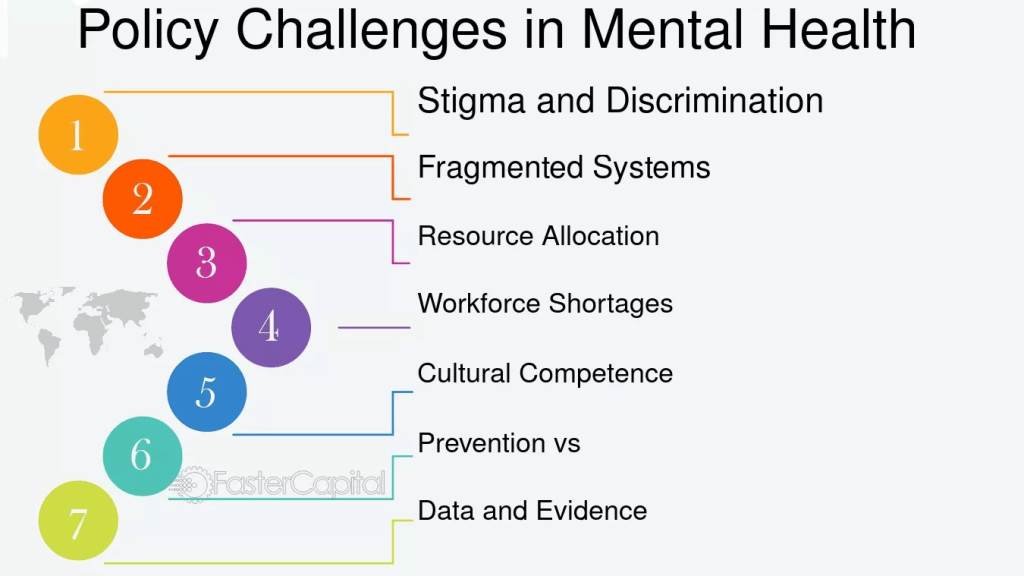
Policy Implementation Gaps
Over the years, the pattern, policy on paper but not enforced in practice, has been persistent, with different authorities occupying important positions, and ambitious projections that barely scratch the surface when evaluated.
Studies across 25 countries in the WHO European region have shown that limited leadership commitment, poor stakeholder engagement, and weak accountability mechanisms all undermine policy rollout once legislation is in place.
In Nigeria, for example, although the Mental Health Act was passed in 2021 to replace colonial-era legislation and mandate the integration of mental health into general healthcare, implementation has lagged because institutional structures and financing mechanisms required to operationalize the Act are not yet in place.
The Kenya Mental Health Action Plan 2021-2025 shows that the national mental health policy identifies major barriers, including a lack of integration with primary healthcare, inadequate human resources, under-resourcing, and the absence of mental health in broader health agendas.
In some cases, policymakers fear that integrating mental health services will divert resources or attention from other urgent health targets, perpetuating a bias towards more “visible” physical health issues.
Persistent Under-Financing and Poor Prioritization
One of the most enduring obstacles is chronic under-investment in mental health. Even when mental health is mentioned in policy documents, it rarely receives budget allocations proportionate to its significance.
According to the World Health Organization (WHO) Mental Health Atlas 2024, governments globally spend, on average, only around 2% of their total health budgets on mental health.
This figure has remained largely unchanged since at least 2017, indicating a persistent under-prioritisation despite rising prevalence and documented needs.
Under-financing is relative; while high-income countries may spend up to US $65 per person on mental health care, low-income countries often spend as little as US$0.04 per person.
Workforce availability also mirrors this gap, with a global median of just 13 mental health workers per 100,000 population, and much lower figures in low- and middle-income countries. (WHO)
In many settings, particularly local settings, specialist mental health professionals are incredibly scarce.
In Nigeria, for instance, there are only 250 practicing psychiatrists for a population exceeding 200 million, meaning that approximately 80% of people with serious mental illness receive no adequate and timely care. (Pmc)
Policy Design Challenges and Narrow Biomedical Focus
Another barrier is the traditional categorizing of mental health within a predominantly biomedical sector.
A holistic approach to effective policy design requires addressing social determinants, including poverty, unemployment, education, housing, and gender inequality.
When policies focus narrowly on treatment rather than prevention and social context, they fail to respond to the realities that drive mental distress in populations.
In this light, WHO calls for a “whole-of-government” and “mental health in all policies” approach, arguing that effective mental health outcomes and care require coordinated action across sectors
However, designing such policies is complex: It requires cross-sector cooperation, shared accountability, and aligned incentives across ministries, conditions that many countries have not yet institutionalized.
As a result, mental health policies often remain health-sector documents with limited influence over broader social and economic policy decisions.
This also explains why many countries can demonstrate policy alignment with international guidance while continuing to experience limited service coverage, poor quality care, and persistent inequities in mental health outcomes.
Stigma and Social Barriers
As trivial as this might sound, it plays a significant role in the lapse of policy integration.
Cultural belief that mental health conditions are less critical an illness, when mirrored in the light of Cancer, hepatitis, etc, which also leads to the household statement “Man up” or “snap out of it,” including the misconception that says: Mental health is a sign of weakness or character flaw.
When mental health issues remain socially invisible or misunderstood, they are less likely to attract strong advocacy, sustained public investment, or political champions, which depresses integration and resourcing, as seen in underdeveloped and developing countries.
Data and Monitoring Barriers
Credible data is crucial for effective policy integration as it helps to inform planners, track progress, and hold systems accountable.
Yet many health systems, especially in Africa, lack robust mental health indicators within their health information systems.
The lack of such data blurs the line between knowing and doing, leading to poor economic and public health debates over investment by policymakers and perpetuating cycles of neglect.
Recognizing the nature of policy design challenges is only the first step.
The more difficult and necessary task is:
Closing the Gap Between Intent and Implementation

Using a Broader Lens in Reframing Mental Health Policy:
As WHO rightly stated, the “mental health in all policies” approach, rather than isolated health-sector interventions, is most effective for mental health promotion. Governments and policymakers can achieve this by:
- Embedding mental health objectives into non-health sector policies. (e.g., labor, education, housing)
- Establishing inter-ministerial coordination mechanisms with shared targets and accountability; and requiring social impact assessments for major policies that may affect the population’s mental well-being.
Strengthening Governance and Leadership for Integration
To bridge this gap, strong leadership with an understanding of the importance of mental health in the health sector plays a crucial role in ensuring that budget negotiation or system reforms are not sidelined.
Practical actions include:
- Positioning mental health units at a senior decision-making level within ministries of health;
- Appointing national mental health coordinators with cross-sector mandates
- Creating formal governance structures that link health ministries with education, labour, justice, and social protection agencies.
Building Robust Data and Accountability Systems
As it is often stated, what gets measured gets managed. Building a robust system that contains relevant data for both grassroots and international health practices is as important as reforming the mental health policy itself.
This is because, without credible data, misappropriated funding and allocation to states and localities are often the result, as well as poor accountability and decision-making.
Key steps include:
- Integrating mental health indicators and Artificial Intelligence into national health management information systems.
- Tracking outcomes alongside physical health indicators and using data to inform planning, budgeting, and performance monitoring.
Aligning Financing With Integration Goals
Policy reform and system redesign must be matched with sustainable financing. At the global level, development partners and donors also have a role to play by aligning international assistance with national integration strategies, rather than funding fragmented, short-term projects.
This includes:
- Increasing the share of health budgets allocated to mental health, earmarking funds for integration into primary care and community services;
- Ensuring financing models incentivize prevention, continuity of care, and cross-sector collaboration.
Engaging Communities and People With Lived Experience
Finally, when communities are active partners rather than passive recipients, integration efforts are more likely to succeed and endure. Practical sensitization in public schools, local communities, and campaigns is fundamental to reducing stigma and increasing grassroots political value.
Only when mental health is fully integrated into health policy and practice will the promise of “no health without mental health” become a reality.
How can we move beyond merely acknowledging that mental health is health to implementing actionable, sustainable strategies that increase mental health care access for local and global communities?
This conversation must continue. Share your insights, experiences, and policy ideas.
About the Author