
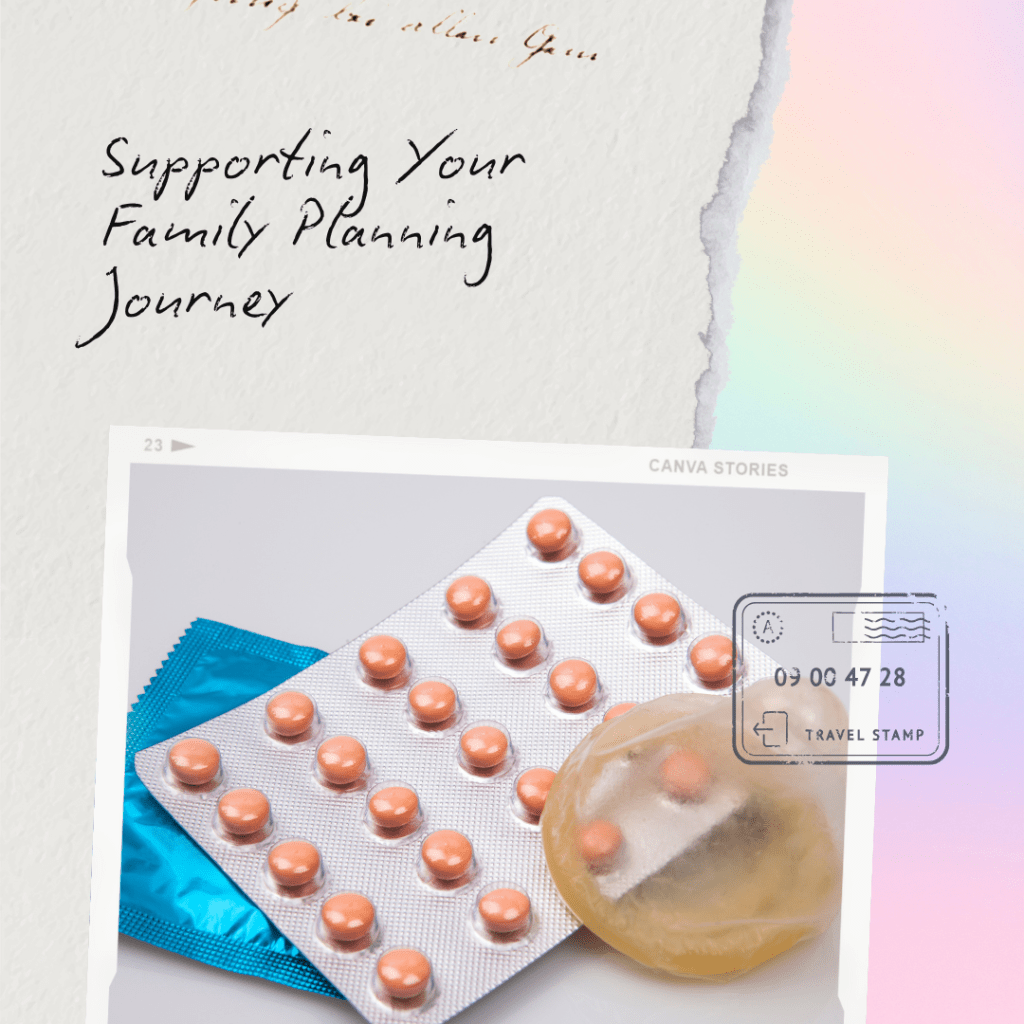
WHO Self Care Recommendations for Family Planning and Infertility Services
Family planning is essential to reproductive health and personal liberty. With millions of unintended pregnancies and preventable maternal deaths every year, particularly in low- and middle-income countries, access to adequate contraception remains a critical global health concern. The World Health Organization (WHO) recommends self-care interventions, such as self-injectable and over-the-counter contraceptives, as practical instruments for increasing choice, privacy, and access to family planning, including infertility treatment.
Recommendation 14: Self-administered injectable contraception should be made available as an additional approach to deliver injectable contraception for individuals of reproductive age.
Recommendation 15: Over-the-counter oral contraceptive pills (OCPs) should be made available without a prescription for individuals using OCPs.
Recommendation 16: Over-the-counter emergency contraceptive pills should be available without a prescription to individuals who wish to use emergency contraception.
Recommendation 17: Home-based ovulation predictor kits should be made available as an additional approach to fertility management for individuals attempting to become pregnant.
Condom Use
Recommendation 18: The consistent and correct use of male and female condoms is highly effective in preventing the sexual transmission of HIV; reducing the risk of HIV transmission, acquiring other STIs and associated conditions, and preventing unintended pregnancy.
Recommendation 19: The correct and consistent use of condoms with condom-compatible lubricants is recommended for all key populations to prevent sexual transmission of HIV and STIs.
Recommendation 20: Provide up to one year’s supply of pills, depending on the woman’s preference and anticipated use.
Programmes must balance the desirability of giving women maximum access to pills with concerns regarding contraceptive supply and logistics.
The resupply system should be flexible, so that the woman can obtain pills easily in the amount and at the time she requires them.
Recommendation 21: Self-testing for pregnancy should be available as an additional option to health worker-led testing for pregnancy, for individuals seeking pregnancy testing.
Eliminating Unsafe Abortion
Recommendation 22: Self-assessing eligibility for medical abortion should be within the context of rigorous research.
Recommendation 23: Managing the mifepristone and misoprostol medication without the direct supervision of a health worker should be in specific circumstances where women have a source of accurate information and access to a health worker should they need or want it at any stage of the process.
Recommendation 24: Self-assessing the completeness of the abortion process using pregnancy tests and checklists should be in specific circumstances where both mifepristone and misoprostol are being used, and where women have a source of accurate information and access to a health worker, should they need or want it at any stage of the process.
Recommendation 25: For medical abortion at any gestational age, pain management should be offered routinely (e.g., non-steroidal anti-inflammatory drugs [NSAIDs]) and it should be provided for the individual to use if and when wanted.
Post-abortion hormonal contraception initiation
Recommendation 26: Self-administering injectable contraceptives should be in circumstances where mechanisms to provide the woman with appropriate information and training exist, referral linkages to a health worker are strong, and where monitoring and follow-up can be ensured.
Recommendation 27: For individuals undergoing medical abortion with the combination mifepristone and misoprostol regimen or the misoprostol-only regimen who desire hormonal contraception, they should be given the option of starting hormonal contraception immediately after the first pill of the medical abortion regimen.
Empowering people with safe, accessible self-care alternatives for family planning enhances health systems, promotes autonomy, and improves reproductive health for everyone.

Leave a comment