

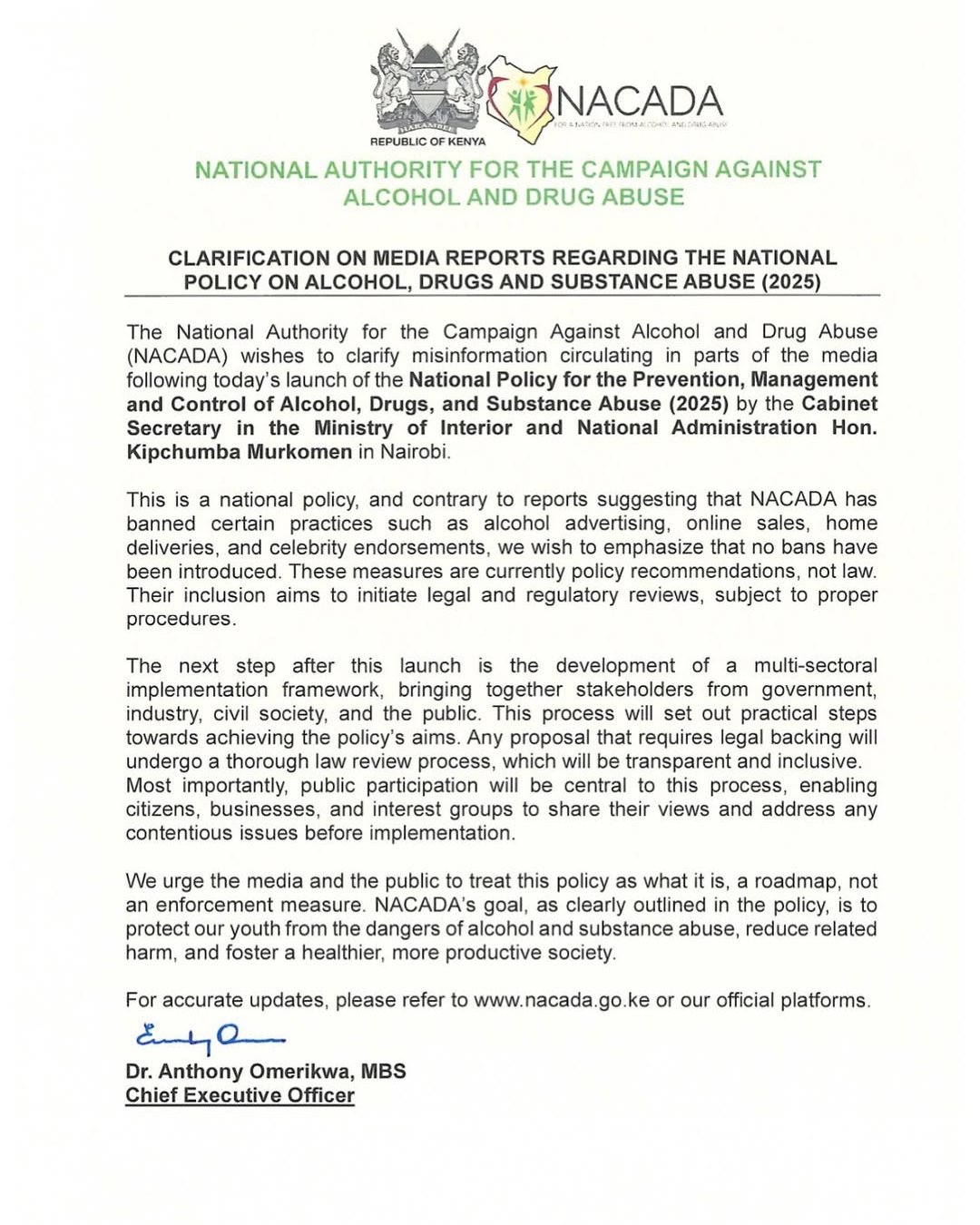
In a significant policy shift aimed at protecting youth and curbing rising alcohol and drug abuse, the National Authority for the Campaign Against Alcohol and Drug Abuse (NACADA) has unveiled a bold proposal to raise the legal drinking age in Kenya from 18 to 21 years. The proposal is part of a broader draft policy document titled the National Policy for the Prevention, Management and Control of Alcohol, Drugs and Substance Use launched today in Nairobi.
The move comes amid growing concern about the widespread use of alcohol among youth, with recent studies indicating a troubling trend of early initiation and increased addiction rates.
Key Policy Proposals
Legal Drinking Age Raised to 21
NACADA is pushing for the minimum age for purchasing, handling, and consuming alcoholic beverages to be raised to 21 years. This would bring Kenya in line with several other countries globally where the legal drinking age is 21, including the United States.
The policy also proposes a complete ban on individuals under 21 entering any establishment licensed to sell alcohol. The places include bars, liquor stores, and restaurants, even if accompanied by adults.
Sales and Consumption Zones Severely Restricted
Alcohol will no longer be sold or consumed in:
- Supermarkets, convenience stores, or groceries
- Online platforms or via delivery services
- Restaurants or hotels
- Public transport hubs such as bus stations and airports
- Residential areas, including estates and apartments
- Beaches, parks, sports arenas, and other public recreation facilities
- Hospitals, schools, and institutions of higher learning
These measures aim to eliminate the visibility and accessibility of alcohol, especially to minors and vulnerable populations.
Stringent Licensing and Zoning Regulations
- Establishments must be at least 300 meters away from schools and learning institutions
- Retail licenses will be issued only to stand-alone liquor premises — supermarkets and chain stores will be excluded
- The national government will handle licensing for manufacturers, importers, and exporters, while counties will regulate retailers and distributors
- Licensing must be multi-sectoral, involving public health, security, and community representation
Advertising and Promotion Overhaul
The draft policy calls for a total ban on alcohol advertising and endorsements by:
- Celebrities
- Social media influencers
- Media personalities
- Sports figures
Any person involved in alcohol marketing must be at least 25 years old, and advertising across radio, television, and digital platforms will be restricted to 10 PM – 5 AM only.
Data-Based Justification
The policy is grounded in NACADA’s recent research among 15,678 university students, which revealed:
- 87.3% had used alcohol, making it the most abused substance
- Alcohol use among students is linked to academic decline, sexual risk behaviors, violence, and mental health issues
- Many students reported obtaining alcohol from supermarkets and online vendors, making access easier and regulation harder

Interior and National Administration Cabinet Secretary Kipchumba Murkomen (right) with NACADA CEO Anthony Omerikwa during the launch of NACADA National Policy for prevention, management and control of alcohol, drug and substance abuse at Radisson Blu hotel on July 30, 2025.
What’s Next
Despite wide media attention and political backing, the proposed policy is still in draft form and not yet legally binding. It must undergo:
- Public participation forums
- Stakeholder consultations (with counties, alcohol industry, civil society, youth groups)
- Parliamentary review and possible legislative enactment
NACADA and the Ministry of Interior have called for public input in shaping the final policy.
Public Reaction
The proposed changes have drawn mixed reactions. While other praised this move by NACADA, some expressed their frustrations. Of course, based on individual interests, the different reactions keep flowing through all media platforms.

Leave a comment