
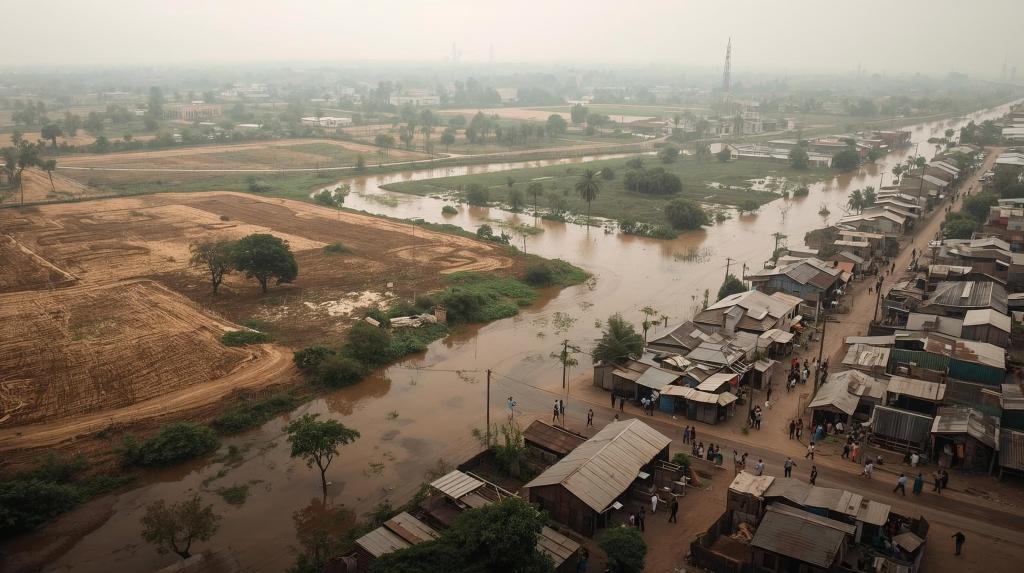
Food insecurity has become one of the most consequential wellness challenges facing West Africa today. It was once discussed primarily in terms of hunger and humanitarian relief. Now, it is widely recognized as a multidimensional public health crisis. It shapes maternal and child survival, mental health, educational attainment, workforce productivity, and the region’s long-term development trajectory. As climate shocks, conflict, and economic volatility converge, food insecurity is no longer episodic or rural. It is structural, urbanizing, and increasingly inter-generational.
Across the region, millions of households are navigating a daily reality in which access to sufficient, nutritious food is uncertain. The implications reach far beyond undernourishment, touching nearly every determinant of health and well-being. For policymakers, food insecurity in West Africa is a defining test of resilience. It is also a significant challenge for development partners regarding governance in the decade ahead.
A crisis of scale and persistence
By 2025, assessments by the World Food Programme (WFP), FAO, and regional food security monitoring systems projected a concerning future. They indicated that more than 50 million people across West Africa would experience acute food insecurity during the annual lean season. This was one of the highest caseloads recorded in the region. Large concentrations were in the central Sahel, northern Nigeria, and conflict-affected border areas.
Children and women have borne the heaviest burden. Millions of children under five were estimated to be acutely malnourished in 2025, with hundreds of thousands suffering severe acute malnutrition; an immediate threat to survival. Pregnant and breastfeeding women face rising rates of under-nutrition and micro-nutrient deficiencies. These conditions increase risks of maternal mortality, chances of low birth weight, and impaired early childhood development.
These figures are unfolding within a global context of stalled progress on hunger reduction. While global hunger has stabilized in some regions, Africa continues to record the highest prevalence of undernourishment. Rising food prices, fiscal constraints and declining humanitarian financing have left West Africa particularly exposed, eroding household coping mechanisms that were already weakened by years of crisis.
The forces driving food insecurity
Food insecurity in West Africa is driven by a convergence of structural and acute shocks. Armed conflict and insecurity remain central. Violence linked to insurgency, communal tensions and organized crime has displaced millions, disrupted agricultural cycles and fractured market systems. Insecurity limits access to farmland, raises transport costs and restricts humanitarian reach, creating food deserts even in agriculturally productive zones.
Climate change has also intensified these vulnerabilities. Extreme flooding, prolonged dry spells and shifting rainfall patterns have undermined harvests and destroyed food stocks across multiple countries. Climate shocks now arrive with greater frequency and severity, overwhelming local adaptive capacity. FAO has repeatedly warned that without accelerated investment in climate-resilient agriculture, yield volatility will continue to destabilize food availability.

Economic pressures compound these risks. Inflation and currency depreciation have driven up food prices, reducing the affordability of nutritious diets for low-income households. Even where food is available in markets, rising costs have forced families to reduce meal frequency, substitute lower-quality foods, or prioritize calories over nutritional value. For urban households, which rely almost entirely on purchased food, price volatility has been particularly damaging.
Displacement magnifies every dimension of vulnerability. Internally displaced persons and refugees often depend on humanitarian assistance to meet basic needs. Funding shortfalls and access constraints have forced agencies to scale back rations in some contexts, pushing already fragile households closer to crisis.
Food insecurity as a public health emergency
The health consequences of food insecurity extend well beyond hunger. Under-nutrition in early life is strongly associated with increased susceptibility to infectious diseases, impaired cognitive development and lower educational attainment. These effects persist into adulthood, shaping lifetime earnings and productivity and reinforcing cycles of poverty.
Food insecurity is also increasingly linked to mental health outcomes. Studies across West Africa have documented higher levels of anxiety, depression and psychosocial distress in food-insecure households, particularly among caregivers. Chronic uncertainty about food access generates sustained stress, undermining family wellbeing and social cohesion.
At the same time, food insecurity interacts with the growing burden of non-communicable diseases. Limited access to diverse, nutritious foods pushes households toward cheaper, energy-dense diets that increase the risk of hypertension, diabetes and cardiovascular disease. For people living with chronic illness, food insecurity can disrupt treatment adherence, forcing impossible choices between food and healthcare.
Education outcomes are similarly affected. Children who attend school hungry struggle to concentrate, perform poorly academically and are more likely to drop out. Where school feeding programmes are well funded and reliably implemented, they have been shown to improve attendance, learning outcomes and nutritional status, highlighting the central role of food security in human capital development.
Regional voices and global concern
Regional and global leaders have increasingly framed food insecurity as an existential challenge. ECOWAS officials have warned that without decisive action, the number of food-insecure people in West Africa could rise sharply during future lean seasons.
“Food insecurity is no longer a cyclical issue; it is becoming structural,” an ECOWAS agriculture official noted in 2025, calling for sustained regional coordination.
From the humanitarian frontline, WFP leadership has sounded repeated alarms about funding gaps.
“Millions are facing emergency levels of hunger at the very moment when resources are shrinking. Without predictable financing, we risk reversing hard-won gains in child survival and nutrition.”
FAO-WFP Report 2025
WHO and FAO have echoed these concerns, emphasizing that food insecurity undermines progress across the Sustainable Development Goals, from health and education to gender equality and economic growth. The agencies stress that nutrition is not a peripheral issue, but a foundation of population health and resilience.
Responses across the region
Governments and partners have mounted a combination of emergency and longer-term responses. Social protection programmes, including cash transfers and food assistance, have expanded in several countries to buffer vulnerable households against price shocks. Nutrition interventions targeting pregnant women and young children remain a core priority, with treatment of acute malnutrition scaled up where access allows.
School feeding programmes continue to play a critical dual role, supporting child nutrition while incentivizing school attendance. Home-grown school feeding models, which source food from local farmers, are increasingly promoted as a way to stabilize rural incomes and strengthen local food systems.

At the regional level, ECOWAS has mobilized food reserves and advocated for coordinated market and trade policies to reduce volatility. Development banks and donors are investing in climate-resilient agriculture, improved storage and market infrastructure, and early warning systems designed to anticipate and mitigate future shocks.
Yet gaps remain substantial. Humanitarian appeals for the region are consistently underfunded, forcing difficult trade-offs in programme coverage. Long-term investments in agricultural transformation and nutrition systems are often fragmented, limiting their impact at scale.
The trajectory of food insecurity in West Africa is not inevitable. The region has significant agricultural potential. It has a young workforce and a growing recognition that food systems are central to health and development. What is required is sustained political commitment and financing that matches the scale of the challenge.
In the immediate term, protecting lives requires action. It involves closing funding gaps for nutrition treatment. Social protection must be prioritized, particularly during the lean season. Over the medium and long term, resilience will depend on transforming food systems to make nutritious diets affordable, climate-resilient and accessible to all.
Food insecurity must be treated as a core public health priority. Investments in nutrition deliver some of the highest returns in development, improving survival, learning and productivity simultaneously. Failure to act risks entrenching a generation-wide health and human capital deficit.
West Africa stands at a crossroads. The decisions currently made by governments, donors, and regional institutions are crucial. These choices will determine whether food insecurity continues to erode wellbeing. Alternatively, they may become a catalyst for more resilient, inclusive systems. As a common refrain in nutrition circles, the future of populations depends on what ends up on the plate today.

Leave a comment