
The World Health Organization (WHO) has issued an urgent medical product alert following the discovery of three substandard oral liquid medicines contaminated with diethylene glycol (DEG) in India. The affected products, COLDRIF, Respifresh TR, and ReLife, were found to contain dangerously high levels of the toxic chemical, leading to acute illness and child fatalities in localized clusters.
The alert, released on 13 October 2025, urges immediate action by health authorities, healthcare professionals, and the public to identify and remove the contaminated products from circulation.
The Products Involved
According to India’s Central Drugs Standard Control Organization (CDSCO), the contaminated syrups were manufactured by three pharmaceutical companies:
- Sresan Pharmaceutical – COLDRIF
- Rednex Pharmaceuticals – Respifresh TR
- Shape Pharma Pvt. Ltd. – ReLife
Laboratory analysis confirmed the presence of diethylene glycol (DEG) in concentrations as high as 48.6%, a toxic level that poses a serious threat to human health. DEG is commonly used in industrial applications such as antifreeze and is not safe for human consumption. Even small amounts can cause acute kidney injury, central nervous system failure, and death, particularly among children.
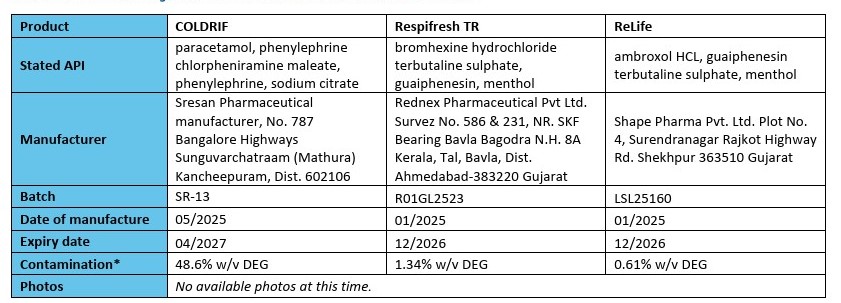
Credits: WHO and Central Drugs Standard Control Organization
The affected products were identified as common cough and cold syrups containing active ingredients such as paracetamol, bromhexine, guaifenesin, terbutaline, and phenylephrine, typically used to relieve cold and flu symptoms.
Rapid Action and Containment Efforts
Following WHO’s initial notification of the incident on 30 September 2025, the CDSCO launched a nationwide investigation. On 8 October, the Indian regulator formally confirmed the contamination and initiated a product recall and production halt across all implicated manufacturing sites. Product authorizations were also suspended pending further inquiry.
Authorities have assured WHO that none of the contaminated syrups were exported outside India, and there is no evidence of illegal international distribution. However, WHO has advised National Regulatory Authorities (NRAs) worldwide to maintain heightened vigilance, especially within informal and unregulated supply chains, where substandard medicines often circulate undetected.
Global Health Implications
While the contamination appears to be localized, WHO’s Global Surveillance and Monitoring System has emphasized that this incident underscores ongoing risks in pharmaceutical quality control and regulatory oversight. Similar DEG-related tragedies have previously occurred in countries such as The Gambia, Uzbekistan, and Indonesia, highlighting the deadly consequences of weak supply chain monitoring and unsafe manufacturing practices.
WHO has called for targeted market surveillance, particularly for oral liquid medicines produced in or around the implicated sites since December 2024, to prevent potential cross-contamination.
“The contaminated oral liquid medicines referenced in this alert are unsafe and their use, especially in children, may result in serious injury or death.” WHO stated.
Health Risks of Diethylene Glycol
Diethylene glycol (DEG) is highly toxic to humans. When ingested, it can cause:
- Severe abdominal pain, vomiting, and diarrhea
- Inability to urinate or kidney failure
- Headache, confusion, or altered consciousness
- Acute kidney injury that may result in death
Children are particularly vulnerable due to smaller body mass and higher susceptibility to toxin accumulation.
Guidance to Health Workers and the Public
WHO urges healthcare professionals to:
- Report any detection of these substandard products or related adverse effects to national pharmacovigilance centers or drug regulatory authorities.
- Increase vigilance in identifying adverse events or unexpected treatment failures linked to oral liquid medicines.
- Educate patients to purchase medicines only from authorized and licensed suppliers.
National authorities are advised to:
- Conduct immediate risk assessments for oral liquid medicines originating from the implicated manufacturing sites.
- Increase surveillance in informal or unregulated markets.
- Notify WHO immediately if contaminated products are detected in their jurisdictions.
Members of the public who suspect they have used these medicines—or know someone who has, are advised to stop using them immediately and seek medical attention if any symptoms occur.
Strengthening Global Medicine Safety
This latest alert underscores the urgent need for stronger global pharmacovigilance systems and robust regulatory frameworks to ensure the safety of essential medicines. It also calls attention to the vulnerability of populations, especially children, in regions where quality assurance systems are weak.
The WHO continues to collaborate closely with Indian authorities to trace the source of the contamination and mitigate further public health risks.
Reporting and More Information
If you have information about these products or other suspected substandard medicines, contact WHO’s Rapid Alert Team at rapidalert@who.int or visit the official WHO portal on Substandard and Falsified Medical Products.
By The Health Pulse Team
Advocating for medicine safety, regulatory accountability, and stronger health systems worldwide.
About the Author





2 thoughts on “WHO Warns India Over Toxic Cough Syrups After Child Deaths ”